





Introduction
A knee meniscus tear is one of the most common knee injuries affecting athletes, active individuals, and even older adults. Whether caused by a sudden twist during sports or gradual wear and tear over time, a meniscus injury can significantly impact mobility, comfort, and quality of life.
good news is that with timely diagnosis, appropriate treatment, and proper rehabilitation, most people can recover successfully and return to their daily activities. This comprehensive guide explains everything you need to know about knee meniscus tears, including causes, symptoms, treatment options, rehabilitation strategies, and prevention tips.
Table of Contents
1. What is a Knee Meniscus Tear?
The meniscus is a C-shaped piece of cartilage located between the thigh bone (femur) and shin bone (tibia). Each knee contains two menisci:
- Medial meniscus (inside of the knee)
- Lateral meniscus (outside of the knee)
These structures act as shock absorbers and help distribute body weight evenly across the knee joint.
A knee meniscus tear occurs when this cartilage becomes damaged due to sudden twisting movements, sports injuries, or age-related degeneration. Depending on the severity, the tear may cause pain, swelling, stiffness, and difficulty moving the knee.
2. Anatomy of the Knee Meniscus
Understanding the structure of the meniscus helps explain why injuries occur.
Functions of the Meniscus
Shock Absorption
The meniscus cushions the knee joint during walking, running, and jumping.
Joint Stability
It helps maintain proper alignment of the knee bones.
Load Distribution
The meniscus spreads body weight evenly across the joint surface.
Protection of Cartilage
It reduces friction and protects the articular cartilage from excessive wear.
Because the meniscus plays such an important role, even a small tear can significantly affect knee function.
3. Common Causes of Knee Meniscus Tear
Sports Injuries
Athletes participating in football, cricket, basketball, badminton, and tennis are particularly susceptible.
Sudden Twisting Movements
Rapid changes in direction while the foot remains planted can tear the meniscus.
Deep Squatting
Repeated squatting or lifting heavy objects may place excessive stress on the knee.
Direct Trauma
Falls, accidents, or direct impact to the knee can damage the meniscus.
Age-Related Degeneration
As people age, cartilage naturally weakens, making tears more likely even during routine activities.
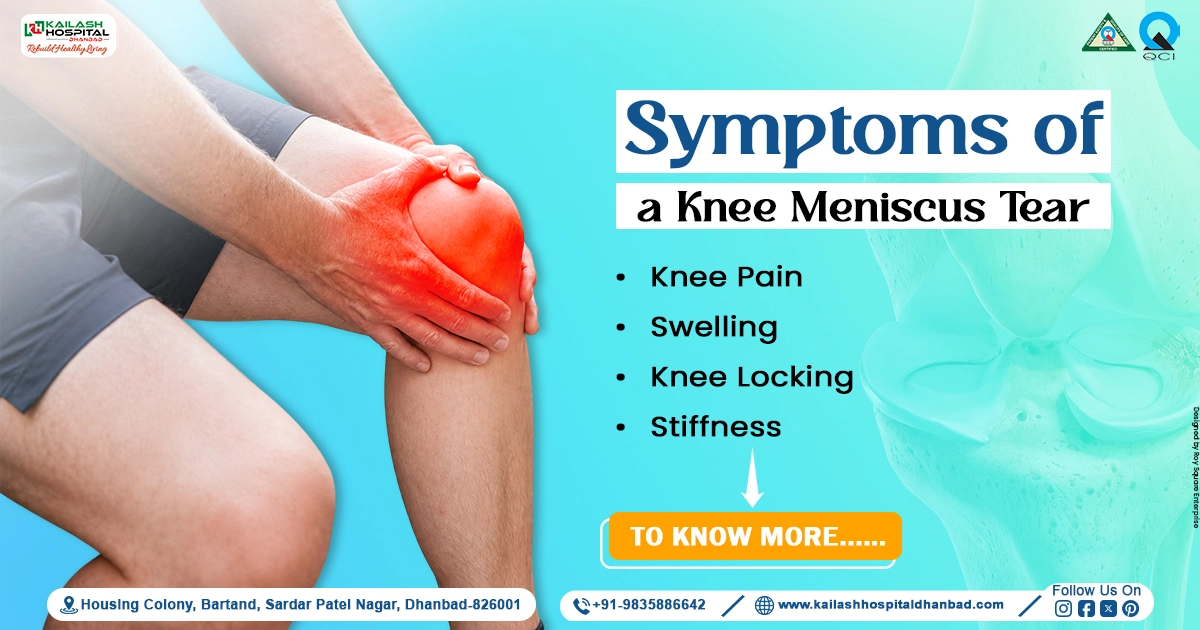
4. Symptoms of a Knee Meniscus Tear
Symptoms may vary depending on the size and location of the tear.
Common symptoms include:
Knee Pain
Pain is usually felt along the joint line.
Swelling
Swelling may develop within a few hours or days after injury.
Knee Locking
The knee may get stuck during movement.
Clicking or Popping Sensation
Many patients report hearing or feeling a pop at the time of injury.
Stiffness
Difficulty fully bending or straightening the knee.
Reduced Range of Motion
Movement becomes restricted due to pain and swelling.
Instability
The knee may feel weak or prone to giving way.
5. Types of Meniscus Tears
Different tear patterns require different treatment approaches.
Radial Tear
The most common type, occurring in the middle portion of the meniscus.
Horizontal Tear
Usually associated with degenerative changes.
Bucket Handle Tear
A large tear where part of the cartilage becomes displaced.
Flap Tear
A loose fragment develops within the joint.
Complex Tear
A combination of multiple tear patterns.
Degenerative Tear
Typically occurs in older adults due to cartilage wear.
6. Treatment Options for Knee Meniscus Tear
Treatment depends on the severity, age, activity level, and type of tear.
A. Conservative Treatment
Rest
Avoid activities that aggravate symptoms.
Ice Therapy
Apply ice packs for 15–20 minutes several times daily.
Compression
Elastic bandages help control swelling.
Elevation
Keeping the leg elevated reduces inflammation.
Medications
Anti-inflammatory medications may help relieve pain and swelling.
B. Physiotherapy
Physiotherapy plays a vital role in recovery by:
- Improving flexibility
- Restoring strength
- Enhancing balance
- Preventing future injuries
C. Surgical Treatment
When conservative treatment is ineffective, surgery may be recommended.
Meniscus Repair
The torn tissue is stitched together.
Partial Meniscectomy
Damaged tissue is removed while preserving healthy cartilage.
Arthroscopic Surgery
According to Dr. Ashish Bajaj, Consultant Orthopedic and Joint Replacement, Arthroscopy at Kailash Hospital, Dhanbad, arthroscopic techniques offer faster recovery and reduced postoperative discomfort for suitable patients.
7. Physiotherapy and Rehabilitation
Successful recovery depends heavily on rehabilitation.
Early Rehabilitation
Goals include:
- Pain reduction
- Swelling control
- Restoring knee mobility
Strengthening Exercises
Focus on:
- Quadriceps muscles
- Hamstrings
- Calf muscles
- Hip stabilizers
Balance and Coordination Training
Improves joint stability and reduces reinjury risk.
Return to Sports
Athletes should only return after receiving clearance from their orthopedic specialist and physiotherapist.
A structured rehabilitation program significantly improves long-term outcomes.
8. How to Prevent a Meniscus Tear
Prevention is always better than treatment.
Warm Up Properly
Prepare muscles and joints before physical activity.
Strengthen Leg Muscles
Strong muscles help protect the knee.
Use Proper Technique
Correct form during exercise reduces injury risk.
Wear Appropriate Footwear
Supportive shoes improve knee alignment and stability.
Avoid Sudden Twisting Motions
Be cautious during sports and physical activities.
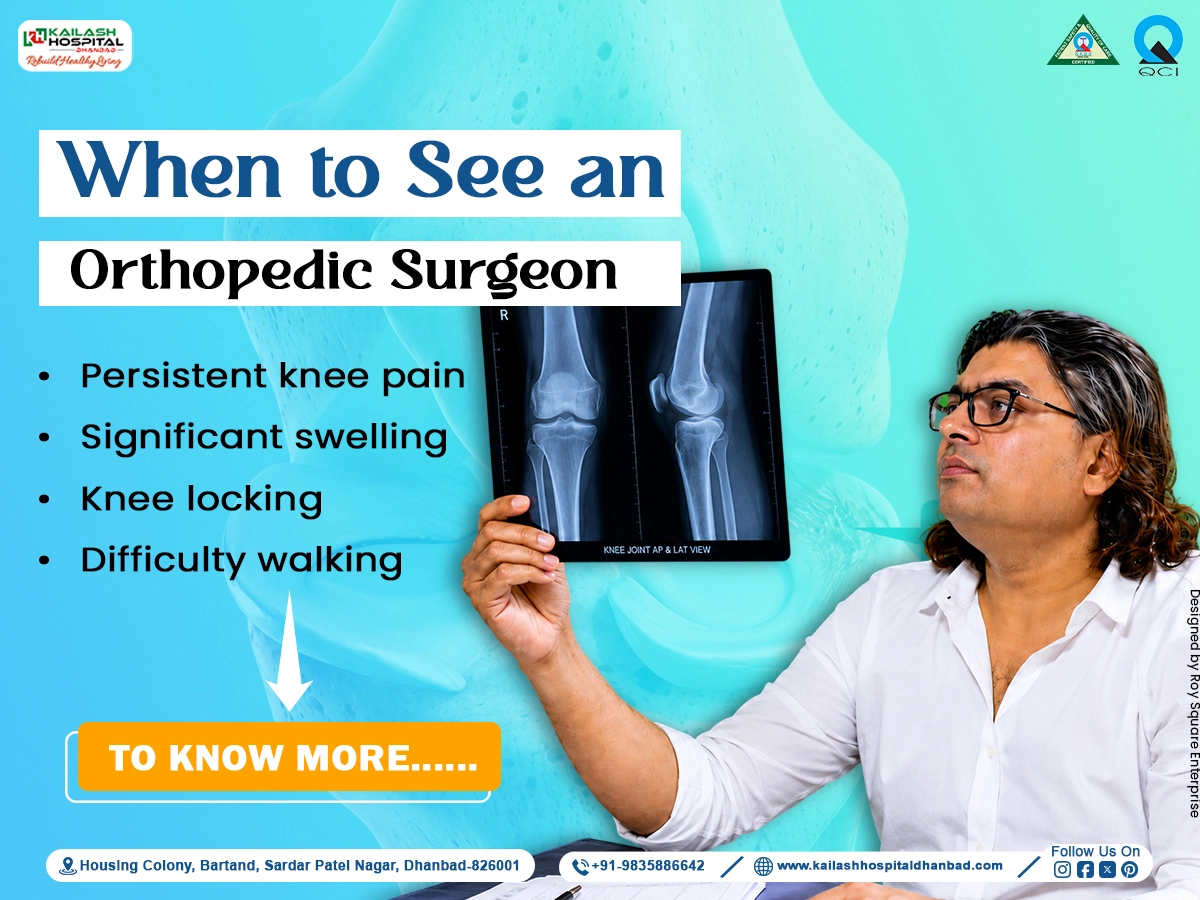
9. When to See an Orthopedic Surgeon
- Persistent knee pain
- Significant swelling
- Knee locking
- Difficulty walking
- Instability of the knee
- Inability to fully bend or straighten the knee
- Symptoms lasting more than a few days
Early consultation can prevent complications and improve recovery outcomes.
Dr. Ashish Bajaj, Consultant Orthopedic and Joint Replacement, Arthroscopy at Kailash Hospital, Dhanbad, specializes in evaluating and treating meniscus injuries using advanced diagnostic and minimally invasive treatment techniques.
Why Choose Kailash Hospital?
Kailash Hospital is dedicated to delivering comprehensive orthopedic care using advanced medical technology and evidence-based treatment approaches.
Benefits of Choosing Kailash Hospital
- Experienced orthopedic specialists
- Advanced diagnostic facilities
- Arthroscopic surgery expertise
- Personalized rehabilitation programs
- Modern operation theatres
- Patient-centered treatment approach
Patients receive expert care under Dr. Ashish Bajaj, Consultant Orthopedic and Joint Replacement, Arthroscopy at Kailash Hospital, Dhanbad, who has extensive experience in managing sports injuries, cartilage damage, and complex knee conditions.
Conclusion
A knee meniscus tear can affect anyone, from professional athletes to older adults experiencing age-related cartilage degeneration. While the injury can be painful and limiting, modern treatment options offer excellent recovery prospects.
Understanding the symptoms, seeking timely diagnosis, following appropriate treatment plans, and committing to rehabilitation are the keys to successful recovery.
If you are experiencing persistent knee pain, swelling, locking, or instability, do not ignore the warning signs. Early consultation with an experienced orthopedic specialist can help preserve knee function and prevent long-term complications.
At Kailash Hospital, Dhanbad, patients benefit from expert orthopedic care, advanced arthroscopic techniques, and personalized rehabilitation programs designed to restore mobility, confidence, and quality of life.
4. How is a meniscus tear diagnosed?
Through physical examination and MRI imaging.
5. Is surgery always necessary?
No. Many cases improve with physiotherapy and conservative management.
6. How long does recovery take?
Recovery varies from a few weeks to several months depending on severity.
7. Can I walk with a torn meniscus?
Some people can walk, but pain and instability may worsen the injury.
8. What happens if a meniscus tear is left untreated?
It can lead to chronic pain, instability, and early arthritis.
9. Is arthroscopic surgery safe?
Yes. It is considered a safe and effective minimally invasive procedure.
10. Can meniscus tears recur?
Yes, especially if rehabilitation is incomplete or the knee experiences repeated stress.