





Introduction
Pregnancy is a beautiful journey, but it also requires careful monitoring to ensure both the mother and baby remain healthy. One important pregnancy complication that expecting mothers should understand is placental insufficiency. This condition occurs when the placenta is unable to provide enough oxygen and nutrients to the growing baby. Early diagnosis and proper treatment can help reduce risks and improve pregnancy outcomes.
At Kailash Hospital, experienced specialist Dr. Neha Bajaj provide advanced pregnancy care and monitoring for high-risk pregnancies, including placental complications.
This detailed guide explains everything you need to know about placental insufficiency, including symptoms, causes, risks, diagnosis, treatment, and prevention.
1. What Is Placental Insufficiency?
Placental insufficiency, also called uteroplacental insufficiency, happens when the placenta does not function properly during pregnancy. The placenta plays a vital role by supplying oxygen and nutrients from the mother to the baby.
When the placenta cannot deliver enough blood flow, the baby may not receive adequate nutrition or oxygen, which can affect growth and development.
Main Functions of the Placenta
- Supplies oxygen to the baby
- Transfers nutrients
- Removes waste products
- Produces important pregnancy hormones
- Protects the baby from infections
A healthy placenta is essential for a healthy pregnancy and safe delivery.
2. Causes of Placental Insufficiency
Several medical and lifestyle factors can contribute to placental insufficiency.
Common Causes
High Blood Pressure
High blood pressure can reduce blood flow to the placenta.
Preeclampsia
This pregnancy complication affects blood circulation and placental function.
Diabetes
Poorly controlled diabetes may damage blood vessels supplying the placenta.
Blood Clotting Disorders
Conditions affecting blood circulation can interfere with placental blood flow.
Smoking and Alcohol
Smoking narrows blood vessels and decreases oxygen supply to the baby.
Poor Nutrition
Lack of essential nutrients can affect placental development.
Placental Abnormalities
Structural problems in the placenta may reduce its efficiency.
According to experts at Kailash Hospital, regular prenatal checkups are important for identifying these conditions early.
3. Risk Factors
Some women have a higher chance of developing placental insufficiency.
Major Risk Factors
- Maternal age above 35
- Obesity
- Chronic hypertension
- Kidney disease
- Previous pregnancy complications
- Twin or multiple pregnancy
- Smoking during pregnancy
- Poor prenatal care
- Autoimmune diseases
Women with high-risk pregnancies should consult specialists such as Dr. Neha Bajaj for close monitoring throughout pregnancy.
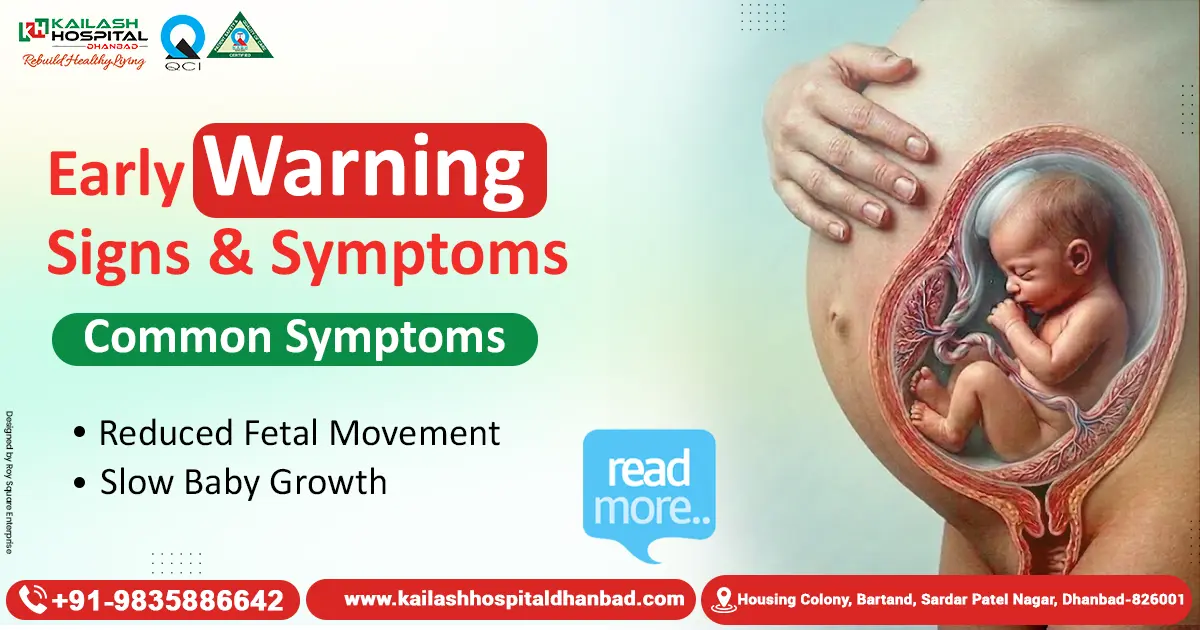
4. Early Warning Signs & Symptoms
Placental insufficiency may not always show obvious symptoms in the early stages. However, some warning signs should never be ignored.
Common Symptoms
Reduced Fetal Movement
Less baby movement may indicate reduced oxygen supply.
Slow Baby Growth
The baby may measure smaller than expected for gestational age.
Vaginal Bleeding
Bleeding during pregnancy requires immediate medical attention.
Low Amniotic Fluid
Low fluid levels may indicate placental problems.
High Blood Pressure
High blood pressure during pregnancy can affect placental circulation.
Abnormal Ultrasound Reports
Growth scans may reveal restricted fetal growth.
If you notice any unusual symptoms during pregnancy, seek medical advice immediately.
5. How Placental Insufficiency Affects the Baby
Placental insufficiency can impact the baby in several ways if not treated properly.
Possible Effects on the Baby
Fetal Growth Restriction (FGR)
The baby may grow more slowly due to reduced nutrition.
Low Birth Weight
Babies may be born smaller than normal.
Premature Birth
Doctors may recommend early delivery if the baby is at risk.
Low Oxygen Levels
Reduced oxygen supply can affect organ development.
Stillbirth Risk
Severe untreated placental insufficiency may increase the risk of pregnancy loss.
Early diagnosis and proper management significantly improve outcomes for both mother and baby.
6. Diagnosis of Placental Insufficiency
Doctors use several tests to diagnose placental insufficiency and monitor the baby’s condition.
Common Diagnostic Tests
Ultrasound Scan
Measures the baby’s growth and placental health.
Doppler Ultrasound
Checks blood flow between the placenta and baby.
Non-Stress Test (NST)
Monitors the baby’s heart rate.
Biophysical Profile (BPP)
Evaluates fetal movement, breathing, and fluid levels.
Maternal Blood Pressure Monitoring
High blood pressure can indicate placental complications.
At Kailash Hospital, advanced fetal monitoring helps doctors detect complications at an early stage.
7. Treatment Options
Treatment depends on the severity of the condition and the stage of pregnancy.
Best Treatment Approaches
Regular Monitoring
Frequent ultrasounds and fetal monitoring are essential.
Healthy Diet
A nutrient-rich diet supports fetal growth.
Blood Pressure Control
Managing hypertension improves placental blood flow.
Bed Rest
In some cases, doctors may recommend reduced physical activity.
Medications
Certain medicines may help improve blood circulation.
Early Delivery
If the baby is in danger, doctors may suggest induced labor or C-section.
Experienced specialist Dr. Neha Bajaj focus on personalized treatment plans to ensure the safest possible pregnancy outcome.
8. Complications of Untreated Placental Insufficiency
Without timely treatment, placental insufficiency can lead to serious complications.
Potential Complications
- Severe fetal growth restriction
- Premature birth
- Birth complications
- Low oxygen supply to the baby
- Developmental delays
- Emergency cesarean section
- Increased stillbirth risk
Proper prenatal care greatly reduces these risks.
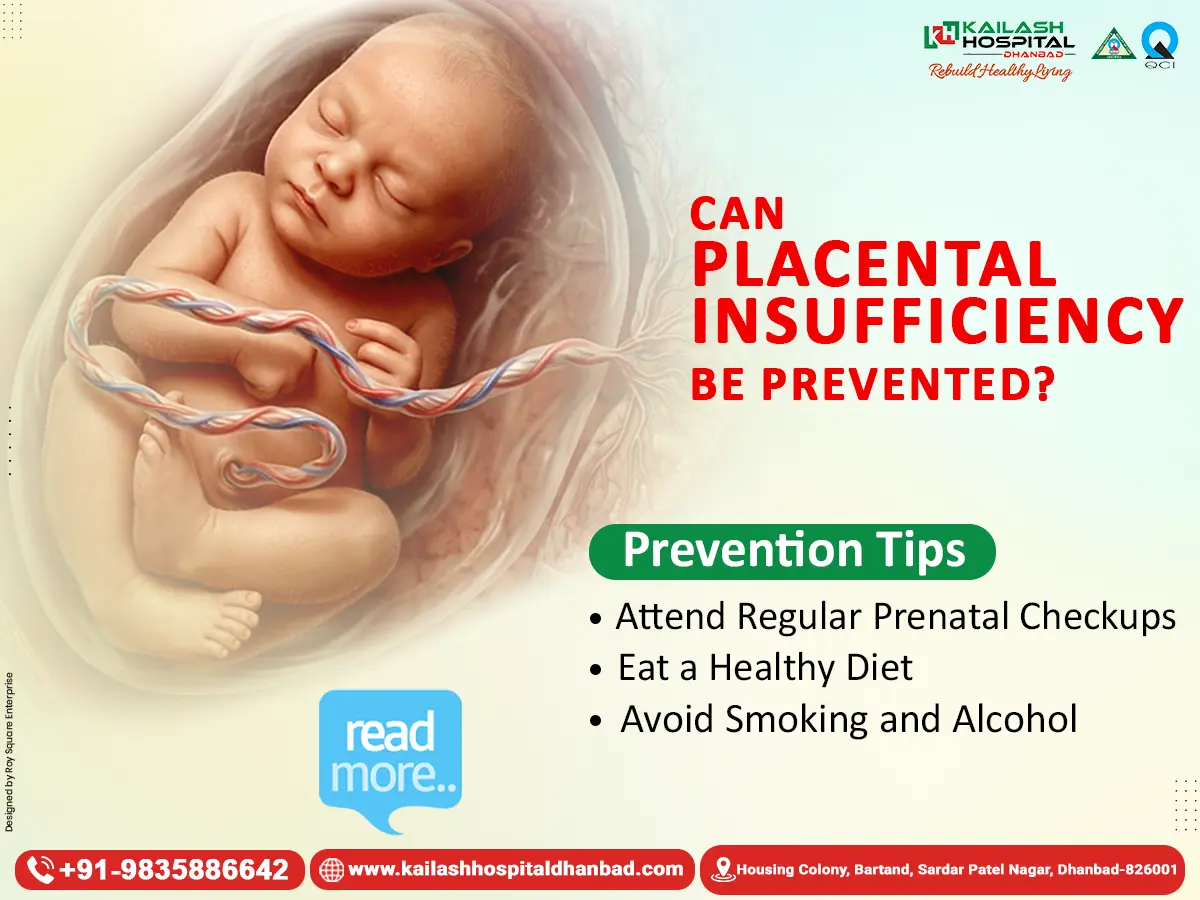
9. Can Placental Insufficiency Be Prevented?
Although not every case can be prevented, healthy pregnancy habits can reduce the risk.
Prevention Tips
Attend Regular Prenatal Checkups
Routine monitoring helps detect problems early.
Eat a Healthy Diet
Consume iron, protein, calcium, and vitamin-rich foods.
Avoid Smoking and Alcohol
These substances reduce oxygen supply to the baby.
Control Medical Conditions
Manage diabetes and high blood pressure properly.
Stay Hydrated
Drinking enough water supports healthy circulation.
Follow Medical Advice
Always follow your doctor’s pregnancy care recommendations.
Pregnancy specialist at Kailash Hospital emphasize the importance of early prenatal care for a healthier pregnancy.
10. When Should You See a Doctor?
Immediate medical attention is necessary if you experience:
- Reduced fetal movement
- Severe abdominal pain
- Vaginal bleeding
- Sudden swelling
- Severe headaches
- Blurred vision
- High blood pressure symptoms
Never ignore warning signs during pregnancy. Early treatment can protect both mother and baby.
Conclusion
Placental insufficiency is a serious pregnancy condition, but with early diagnosis, regular monitoring, and proper medical care, many women go on to have healthy pregnancies and safe deliveries. Understanding the warning signs and seeking timely treatment can make a major difference in pregnancy outcomes.
If you are experiencing symptoms or have a high-risk pregnancy, consult experienced specialist Dr. Neha Bajaj for expert guidance and advanced maternity care.
1. Is placental insufficiency dangerous?
Yes, if untreated, it can affect the baby’s growth and oxygen supply.
2. Can placental insufficiency be treated?
It cannot always be completely cured, but proper monitoring and treatment can manage the condition effectively.
3. What are the first signs of placental insufficiency?
Reduced fetal movement and slow baby growth are common early signs.
4. Can placental insufficiency cause premature delivery?
Yes, severe cases may require early delivery for the baby’s safety.
5. How is placental insufficiency diagnosed?
Doctors use ultrasound scans, Doppler studies, and fetal monitoring tests.
6. Does smoking increase the risk?
Yes, smoking significantly affects placental blood flow.
7. Can the baby survive placental insufficiency?
Many babies do well with early diagnosis and proper treatment.
8. Is bed rest necessary?
Some women may be advised to reduce physical activity depending on the severity.
9. Can placental insufficiency happen in every pregnancy?
No, but women with certain medical conditions have a higher risk.
10. When should I consult a doctor?
Seek medical help immediately if you notice reduced fetal movement, bleeding, or severe pregnancy symptoms.