





Orthopaedic problems like joint pain, arthritis, and bone injuries can make even simple movements painful. In recent years, stem cell therapy has become a breakthrough treatment in regenerative orthopaedic, offering new hope to patients who want to heal naturally — without major surgery.
According to Dr. Ashish Bajaj, Consultant Orthopaedic, Kailash Hospital, Dhanbad, stem cell therapy helps repair damaged tissues, reduce inflammation, and promote faster recovery. It’s a modern, minimally invasive solution that supports the body’s natural healing process.
Let’s explore everything you need to know about Stem Cell Therapy in Regenerative Orthopaedics — its benefits, process, risks, and recovery.
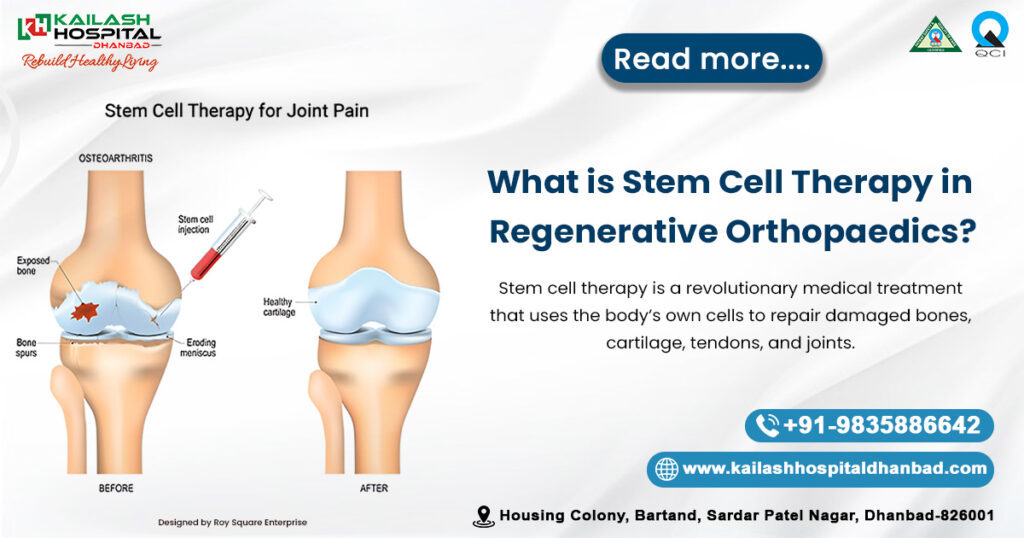
1. What is Stem Cell Therapy in Regenerative Orthopaedics?
Stem cell therapy is a revolutionary medical treatment that uses the body’s own cells to repair damaged bones, cartilage, tendons, and joints. These cells have the unique ability to grow into different types of tissues, making them ideal for healing musculoskeletal injuries.
In simple words:
Stem cells are like “master cells” that can regenerate new tissue and help heal injuries naturally.
Dr. Ashish Bajaj, the best orthopaedic in Dhanbad, explains that stem cell therapy helps in reducing pain, improving movement, and restoring joint function — especially for patients who wish to avoid surgery.
2. Symptoms of Orthopaedic Conditions That May Need Stem Cell Therapy
Stem cell therapy is often recommended when a patient experiences:
- Persistent joint pain (knee, hip, shoulder).
- Swelling or stiffness in joints.
- Difficulty walking or climbing stairs.
- Slow recovery from sports injuries.
- Reduced mobility or flexibility.
- Non-healing bone or tendon injuries.
If you experience these symptoms, a consultation with Dr. Ashish Bajaj, Consultant Orthopaedic, Kailash Hospital, Dhanbad, can help determine whether stem cell therapy is right for you.
3. Types of Stem Cells Used in Orthopaedics
There are mainly two types of stem cells used for orthopaedic regeneration:
- Autologous Stem Cells:
- Taken from the patient’s own bone marrow or fat.
- Safest and most commonly used.
- Allogeneic Stem Cells:
- Derived from healthy donors.
- Used when patient’s own cells are not suitable.
Both types help promote healing and repair damaged tissues naturally.
4. Causes of Orthopaedic Damage or Degeneration
Orthopaedic damage can occur due to several reasons, such as:
- Age-related joint wear and tear (osteoarthritis).
- Sports or physical injuries.
- Overuse of joints.
- Accidents or fractures.
- Obesity or poor posture.
- Genetic or autoimmune conditions.
Stem cell therapy helps restore joint health by repairing damaged cells and regenerating new tissue.
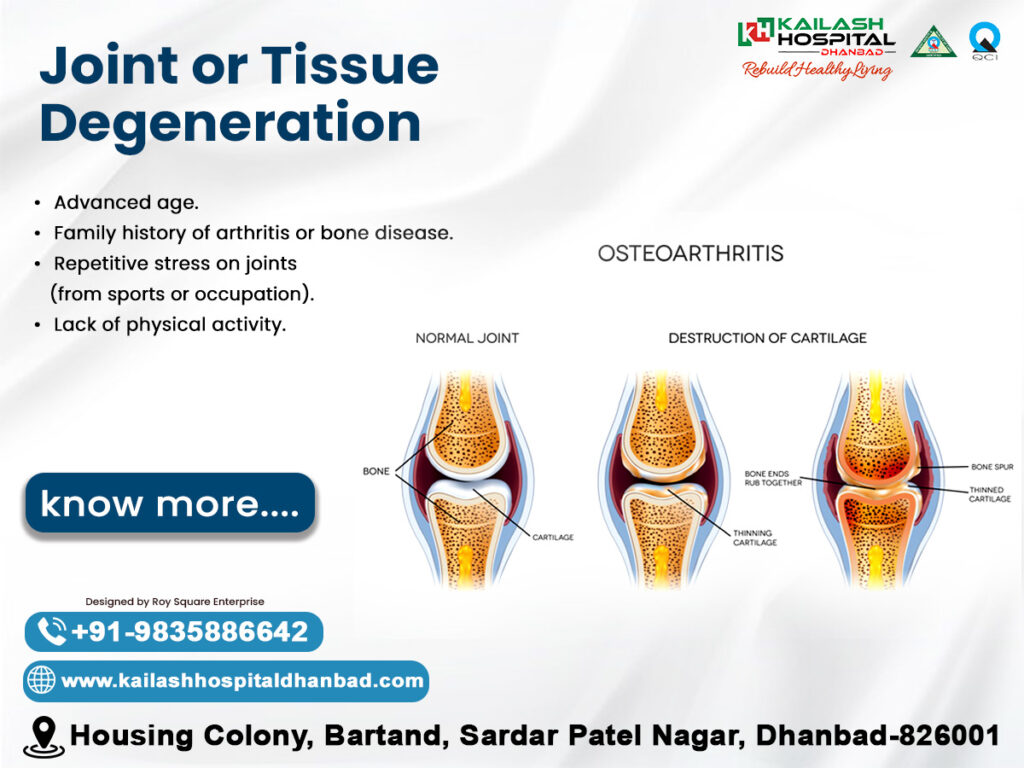
5. Risk Factors for Joint or Tissue Degeneration
Certain factors increase the risk of needing regenerative treatment, including:
- Advanced age.
- Family history of arthritis or bone disease.
- Repetitive stress on joints (from sports or occupation).
- Lack of physical activity.
- Obesity.
- Poor nutrition and smoking habits.
By identifying these risks early, patients can take preventive steps and seek treatment before the condition worsens.
6. Diagnosis before Stem Cell Therapy
Before recommending stem cell therapy, doctors perform a thorough evaluation which may include:
- Detailed physical examination.
- X-rays or MRI scans.
- Blood tests.
- Medical and injury history review.
- Assessment of joint strength and flexibility.
At Kailash Hospital, Dhanbad, Dr. Ashish Bajaj ensures each patient receives a detailed diagnosis to confirm whether stem cell therapy is the most effective option.
7. Treatment Options in Regenerative Orthopaedics
Stem cell therapy is one of several advanced treatments used in regenerative orthopaedics.
Available Options Include:
- Stem Cell Therapy: Uses stem cells to rebuild damaged tissues.
- Platelet-Rich Plasma (PRP) Therapy: Uses your blood’s platelets to promote healing.
- Prolotherapy: Involves injecting natural substances to stimulate tissue repair.
- Minimally Invasive Procedures: Used for quick pain relief and fast recovery.
- Rehabilitation and Physiotherapy: Supports strength and mobility post-treatment.
Stem cell therapy often works best when combined with these modern and traditional therapies.
8. The Stem Cell Therapy Procedure – Step-by-Step
Here’s how the procedure typically works:
- Consultation and Diagnosis – Initial assessment by the orthopaedic specialist.
- Stem Cell Collection – Extraction of stem cells from bone marrow or fat tissue.
- Processing and Purification – Stem cells are processed to concentrate the active cells.
- Injection – The concentrated stem cells are injected into the affected joint or tissue.
- Healing Phase – The stem cells promote natural regeneration of damaged tissue over time.
Dr. Ashish Bajaj, Consultant Orthopaedic, Kailash Hospital, Dhanbad, performs this procedure using the latest medical technologies for maximum safety and success.
9. Recovery after Stem Cell Therapy
Recovery time varies depending on the injury type and individual health, but most patients can:
- Resume light activities in a few days.
- Notice pain relief within 2–6 weeks.
- Experience full benefits within 3–6 months.
Post-procedure care includes:
- Avoiding heavy exercise initially.
- Regular physiotherapy.
- Balanced diet and hydration.
- Follow-up visits for monitoring.
Most patients report reduced pain and improved joint function without major side effects.
10. Possible Complications or Side Effects
Stem cell therapy is generally safe, but as with any procedure, minor complications can occur, such as:
- Temporary pain or swelling at the injection site.
- Mild stiffness or soreness.
- Rare allergic reaction or infection.
Under expert supervision of Dr. Ashish Bajaj, best orthopaedic in Dhanbad, these risks are minimized through advanced safety protocols and sterilized techniques.
Top 10 Frequently Asked Questions (FAQs)
1. What is stem cell therapy in orthopaedics?
It’s a regenerative treatment that uses the body’s own stem cells to repair damaged joints, bones, or cartilage.
2. Is stem cell therapy safe?
Yes, it’s safe when performed by an experienced orthopaedic specialist using sterile techniques.
3. Who is a good candidate for stem cell therapy?
Patients with arthritis, tendon injuries, or joint degeneration who wish to avoid surgery.
4. How long does the procedure take?
Usually 1–2 hours, and it’s performed as an outpatient procedure.
5. is the treatment painful?
Mild discomfort may occur during injection, but anaesthesia is used to minimize pain.
6. How soon can I return to normal activities?
Most people resume light activities within 3–5 days.
7. How long do results last?
Results can last for years depending on the severity of the condition and lifestyle.
8. Can it replace joint replacement surgery?
In early to moderate cases, yes — stem cell therapy can delay or even prevent surgery.
9. Are there any risks?
Very minimal, including temporary swelling or soreness at the injection site.
10. Where can I get stem cell therapy in Dhanbad?
At Kailash Hospital, Dhanbad, under the expert care of Dr. Ashish Bajaj, Consultant Orthopaedic and one of the best orthopaedics in Dhanbad.
Why Choose Kailash Hospital, Dhanbad?
Kailash Hospital, Dhanbad is a trusted name for advanced orthopaedic and regenerative care.
Why patients prefer us:
- Expertise of Dr. Ashish Bajaj, Consultant Orthopaedic and best orthopaedic in Dhanbad.
- State-of-the-art facilities for regenerative and orthopaedic treatments.
- Latest technology for stem cell and PRP therapies.
- Patient-centred care with personalized rehabilitation plans.
- Safe, effective, and minimally invasive procedures.
Our mission is to help you regain mobility, strength, and pain-free living through modern, evidence-based treatment.
Conclusion
Stem Cell Therapy in Regenerative Orthopaedics is transforming the future of joint and bone care. It offers a safe, natural, and effective way to heal damaged tissues, relieve pain, and restore function — without the need for surgery.
With the expertise of Dr. Ashish Bajaj, Consultant Orthopaedic at Kailash Hospital, Dhanbad, patients can expect world-class treatment, advanced care, and long-lasting results.
If you’re struggling with chronic joint pain or an old injury, stem cell therapy might be your key to a pain-free and active life again.