





Introduction
Uterine polyps, also known as endometrial polyps, are a common yet often overlooked condition affecting women of different age groups. While many cases are harmless, ignoring the symptoms can lead to complications like irregular bleeding or fertility issues.
This guide is designed to give you clear, practical, and reliable information—so you can take the right steps at the right time.
1. What Are Uterine Polyps?
Uterine polyps are soft, finger-like growths that develop in the inner lining of the uterus (endometrium).
- They can be small or large, single or multiple
- Usually non-cancerous (benign)
- Common in women between 30–50 years
- May remain unnoticed if no symptoms appear
In some rare cases, they may carry precancerous or cancerous changes, which is why timely evaluation is important.
2. Causes of Uterine Polyps
- Hormonal imbalance, especially excess estrogen
- Perimenopause or menopause
- Obesity
- High blood pressure
- Use of hormone therapy medications
Hormones play a major role, as polyps tend to grow when estrogen levels are higher.
3. Symptoms of Uterine Polyps
Some women may not experience symptoms, but when they do occur, they often include:
- Irregular menstrual cycles
- Heavy or prolonged periods
- Bleeding between periods
- Postmenopausal bleeding
- Difficulty in conceiving
If you notice any unusual bleeding pattern, it’s important not to ignore it.
4. Diagnosis of Uterine Polyps
Accurate diagnosis helps in choosing the right treatment. Common methods include:
- Transvaginal Ultrasound – First step imaging
- Hysteroscopy – A thin camera inserted into the uterus (gold standard)
- Endometrial Biopsy – Tissue sample testing
- Sonohysterography – Saline-enhanced ultrasound
An experienced specialist Dr. Neha Bajaj, consultant gynaecologist and obstetrician and fertility specialist, ensures precise diagnosis and personalized care.
5. Treatment Options for Uterine Polyps
Non-Surgical Treatment
- Hormonal medications to manage symptoms
- Observation for small, symptom-free polyps
Surgical Treatment
- Hysteroscopic Polypectomy (minimally invasive and effective)
- Quick procedure with faster recovery
At Kailash hospital, Dhanbad, advanced techniques are used to ensure safe and comfortable treatment for patients.
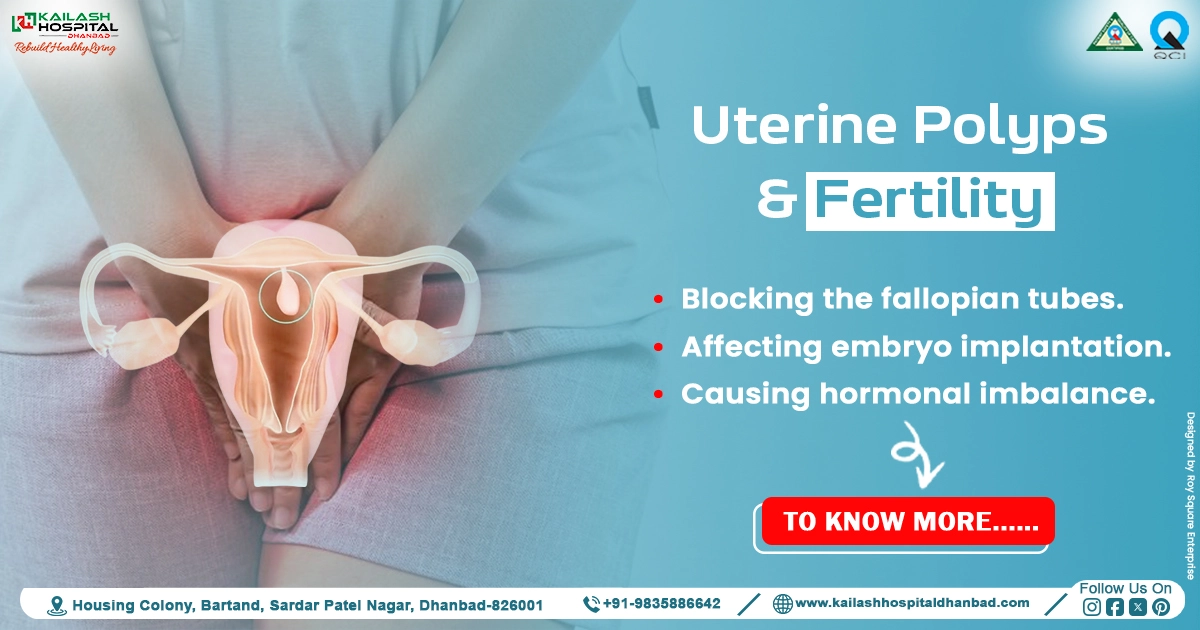
6. Uterine Polyps & Fertility
Uterine polyps can sometimes interfere with fertility by:
- Blocking the fallopian tubes
- Affecting embryo implantation
- Causing hormonal imbalance
Removing polyps often improves chances of pregnancy, especially in women trying to conceive.
Consulting experts Dr. Neha Bajaj, consultant gynaecologist and obstetrician and fertility specialist can help you plan the best fertility-focused treatment.
7. Complications & Risks
While most polyps are harmless, untreated cases may lead to:
- Chronic abnormal bleeding
- Anemia due to heavy periods
- Infertility issues
- Rare risk of cancer
Regular check-ups reduce these risks significantly.
8. Prevention Tips
Though not always preventable, you can lower risks by:
- Maintaining a healthy weight
- Regular gynecological checkups
- Managing hormonal health
- Early screening for abnormal symptoms
Prevention is always easier than treatment.
9. Why Early Treatment Matters
Early diagnosis and treatment can:
- Prevent complications
- Improve fertility outcomes
- Reduce anxiety and discomfort
- Ensure better long-term health
Timely care at Kailash hospital, Dhanbad can make a significant difference in recovery and overall well-being.

10. Choosing the Right Doctor/Hospital
- Experienced gynecologist
- Advanced diagnostic facilities
- Minimally invasive treatment options
- Good patient care and support
Dr. Neha Bajaj, consultant gynaecologist and obstetrician and fertility specialist, is known for her patient-centered approach and expertise in managing uterine conditions.
Kailash hospital, Dhanbad provide comprehensive women’s healthcare under one roof, ensuring safety and comfort.
Conclusion
Uterine polyps are common but manageable with the right care. Understanding the symptoms, causes, and treatment options empowers you to take control of your health.
Early diagnosis, expert guidance from specialist Dr. Neha Bajaj, consultant gynaecologist and obstetrician and fertility specialist, and quality care at Kailash hospital, Dhanbad can ensure safe and effective treatment.
1. Are uterine polyps cancerous?
Most are benign, but a small percentage may be precancerous or cancerous.
2. Can uterine polyps go away on their own?
Small polyps may resolve, but many require treatment.
3. Is surgery always required?
Not always—depends on size, symptoms, and patient condition.
4. Is hysteroscopy painful?
It is minimally invasive and usually well-tolerated.
5. Can uterine polyps affect pregnancy?
Yes, they may interfere with implantation.
6. How long is recovery after removal?
Most patients recover within a few days.
7. Can polyps come back?
Yes, recurrence is possible but manageable.
8. What age group is most affected?
Women between 30–50 years are more commonly affected.
9. Should postmenopausal bleeding be ignored?
No, it requires immediate medical evaluation.
10. When should I see a doctor?
If you notice abnormal bleeding or fertility issues.