





While the diagnosis can feel worrying, the good news is that uterine fibroids are treatable, and many women lead completely healthy, symptom-free lives with the right medical care.
At Kailash Hospital, Dhanbad, women receive expert, compassionate gynecological care under specialists like Dr. Neha Bajaj, Consultant Gynaecologist, Obstetrician, and Fertility Specialist, who focuses on personalised, fertility-preserving treatment whenever possible.
This guide explains uterine fibroids and their treatment in a clear, reassuring, and easy-to-understand manner—so you can make informed decisions with confidence.
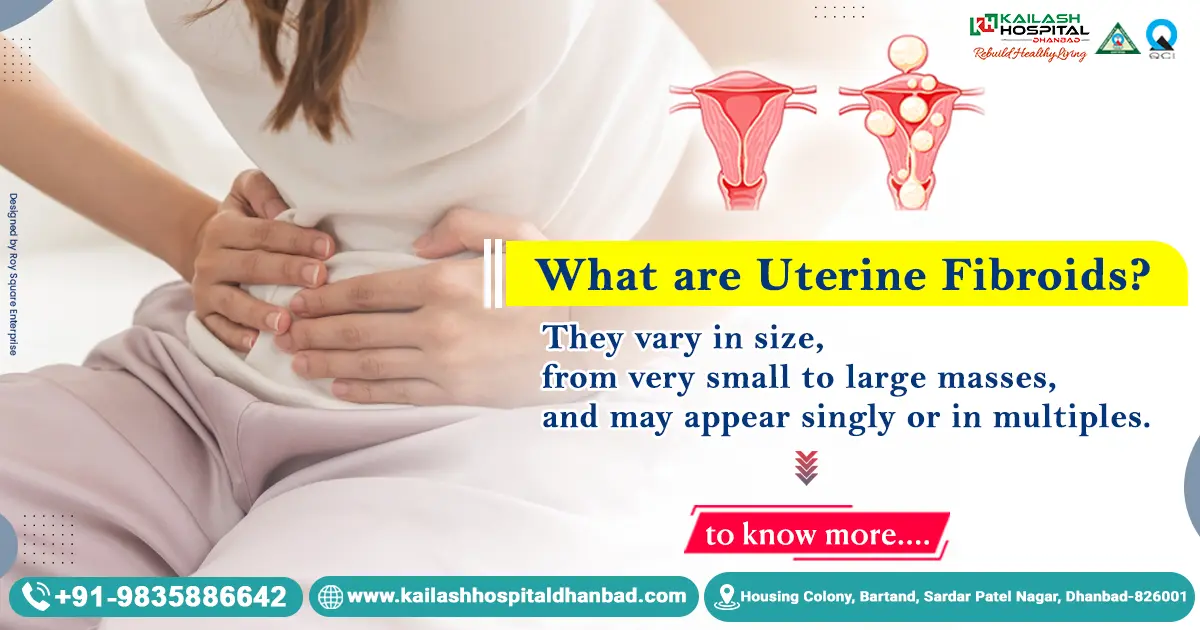
1. What are Uterine Fibroids?
They vary in size—from very small to large masses—and may appear singly or in multiples.
Fibroids are common during reproductive years and often develop silently. Not every fibroid requires treatment; care is recommended when symptoms affect quality of life or fertility.
2. Symptoms of Uterine Fibroids
Many women experience no symptoms, but when present, symptoms may include:
Heavy or prolonged menstrual bleeding
Pelvic pain or pressure
Frequent urination
Lower back pain
Pain during intercourse
Abdominal bloating
Difficulty conceiving or pregnancy complications
If these symptoms persist, consulting a specialist Dr. Neha Bajaj at Kailash Hospital, Dhanbad helps in early diagnosis and management.
3. Types of Uterine Fibroids
Intramural Fibroids
Submucosal Fibroids
Subserosal Fibroids
Grow on the outer surface of the uterus and may cause pressure symptoms.
Attached to the uterus by a stalk and can cause sudden pain if twisted.
4. Causes of Uterine Fibroids
Doctor believe uterine fibroids develop due to a combination of hormonal changes, genetic influence, and abnormal growth of uterine muscle tissue.
Doctors believe uterine fibroids develop due to a combination of hormonal changes, genetic influence, and abnormal growth of uterine muscle tissue
Doctors believe uterine fibroids develop due to a combination of hormonal changes, genetic influence, and abnormal growth of uterine muscle tissue
Hormonal imbalance (estrogen and progesterone)
Genetic predisposition
Changes in uterine muscle cells
Growth factors influencing tissue development
Fibroids tend to grow during reproductive years and shrink after menopause.
5. Risk Factors
Women may be at higher risk due to:
Family history of fibroids
Early onset of menstruation
Obesity
Hormonal imbalance
Vitamin D deficiency
High-stress lifestyle
Understanding risk factors allows proactive monitoring and early care.
6. Diagnosis of Uterine Fibroids
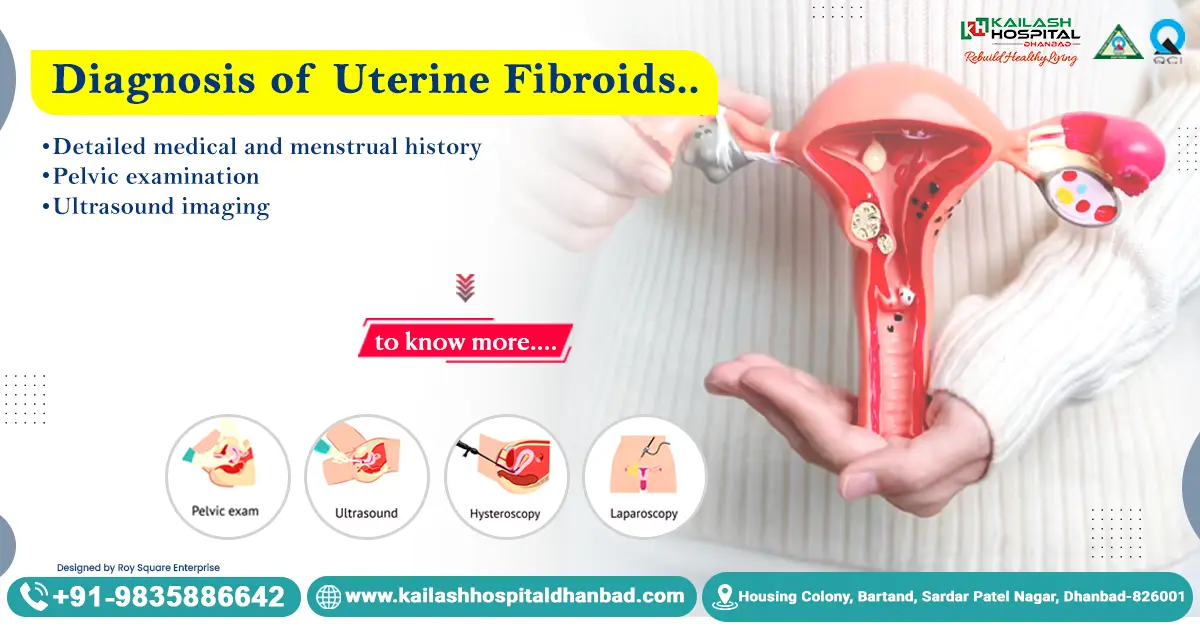
Accurate diagnosis ensures effective treatment. At Kailash Hospital, Dhanbad, evaluation may include:
Detailed medical and menstrual history
Pelvic examination
Ultrasound imaging
MRI (if required for detailed mapping)
Blood tests to assess anemia
Dr. Neha Bajaj ensures each diagnostic step is explained clearly, helping patients feel confident and involved in their care.
7. Treatment Options
Treatment depends on symptoms, fibroid size, age, and fertility plans.
Conservative Management
Observation for small, symptom-free fibroids
Regular monitoring
Medical Treatment
Hormonal medications
Drugs to control heavy bleeding
Pain management
Minimally Invasive Procedures
Myomectomy (fibroid removal while preserving the uterus)
Hysteroscopic fibroid removal
Surgical Treatment
Laparoscopic surgery
Hysterectomy (only when absolutely necessary)
At Kailash Hospital, fertility-friendly approaches are prioritised whenever possible under expert guidance.
8. Precautions & Lifestyle Care
Women can manage symptoms and reduce fibroid growth by:
Maintaining a healthy weight
Eating iron-rich foods
Managing stress
Regular exercise
Avoiding self-medication
Scheduling routine gynecological check-ups
Healthy habits complement medical treatment effectively.

9. Possible Complications
If left untreated, fibroids may lead to:
Severe anemia
Chronic pelvic pain
Infertility
Pregnancy complications
Recurrent miscarriages
Early intervention significantly reduces these risks.
At Kailash Hospital, Dhanbad, under specialists like Dr. Neha Bajaj.
10. Why Choose Kailash Hospital, Dhanbad?
Experienced gynecology specialists
Advanced diagnostic and surgical facilities
Fertility-preserving treatment approach
Ethical, patient-centered care
Modern infrastructure and support services
With Dr. Neha Bajaj, patients receive trusted care tailored to their health goals.
11. Conclusion
Uterine fibroid may be common, but they don’t have to control your life. With early diagnosis, personalised treatment, and expert guidance, most women experience complete relief and improved quality of life.
If you are experiencing symptoms or have concerns about fibroids, consulting Dr. Neha Bajaj at Kailash Hospital, Dhanbad, can help you take the right step toward lasting health and confidence. Empowered knowledge, expert care, and timely treatment lead to healthier outcomes.
1. Are uterine fibroids cancerous?
No, fibroids are non-cancerous.
2. Do all fibroids require surgery?
No, many are managed without surgery.
3. Can fibroids affect fertility?
Yes, depending on size and location.
4. Can fibroids recur after treatment?
Yes, but regular follow-up helps early detection.
5. Are fibroids common?
Yes, especially during reproductive years.
6. Do fibroids shrink after menopause?
Usually, yes.
7. Is pregnancy possible with fibroids?
Yes, many women conceive successfully.
8. Is myomectomy safe?
Yes, when performed by experienced specialists.
9. Can lifestyle changes help?
They help manage symptoms and overall health.
10. Where can I get expert fibroid treatment in Dhanbad?
At Kailash Hospital, Dhanbad, under specialists like Dr. Neha Bajaj.