





Paresthesia causes, paresthesia symptoms, paresthesia treatment, tingling sensation in feet, numbness and tingling, pins and needles sensation, nerve compression, spine care treatment, nerve pain, orthopedic specialist
1. What Is Paresthesia?
Have you ever experienced a strange tingling, numbness, burning, or pins-and-needles sensation in your hands, feet, arms or legs? The medical term for these abnormal sensations is paresthesia.
Paresthesia is a symptom rather than a disease itself. It can happen temporarily when pressure is placed on a nerve—for example, when you sit in one position for too long and your foot feels “asleep.” In these situations, the sensation usually disappears after you change position and move around.
However, frequent or persistent paresthesia can have other causes. Nerve compression, diabetes, peripheral nerve problems, vitamin B12 deficiency, injuries, and certain spinal conditions can all contribute to numbness or tingling.
When paresthesia is connected to the spine, a compressed or irritated nerve may send abnormal sensations into the arms or legs. For this reason, recurring tingling accompanied by back or neck pain should not simply be ignored.
The good news is that identifying the underlying cause can help doctors choose the right treatment and prevent symptoms from interfering with everyday life.
2. What Does Paresthesia Feel Like?
Paresthesia can feel different from person to person. Some people describe it as mild tingling, while others experience burning or reduced sensation.
Common descriptions include:
Tingling
A sensation similar to tiny pins and needles moving over the skin.
Numbness
The affected area may feel less sensitive to touch, temperature, or pressure.
Burning
Some people experience a warm, burning, or irritating feeling.
Prickling
It may feel as though small needles are repeatedly touching the skin.
Crawling Sensation
Some people describe paresthesia as feeling like something is crawling underneath or across the skin.
Electric-Shock-Like Sensation
An irritated or compressed nerve may sometimes produce sharp, shooting or electric-like sensations.
Paresthesia may occur in one specific area or affect larger parts of the body. The location often provides useful clues about which nerves may be involved.
3. Common Causes of Paresthesia
Paresthesia can have many possible causes. Finding the underlying cause is more important than simply treating the sensation.
1. Temporary Nerve Pressure
Sitting, sleeping, or standing in an awkward position can place temporary pressure on a nerve. Once the pressure is removed, normal sensation usually returns.
2. Pinched Nerve
A pinched nerve may cause tingling, numbness, pain, or weakness in the area supplied by that nerve.
3. Spinal Disc Problems
A bulging or herniated disc can sometimes press against a spinal nerve. Depending on the location, this may cause symptoms that travel from the neck or back into an arm or leg.
4. Spinal Stenosis
Narrowing around the spinal canal or nerve passages can put pressure on nerves. This may lead to pain, numbness, tingling, or weakness, particularly in the legs in some people.
5. Peripheral Neuropathy
Peripheral nerve disorders can affect sensation in the hands and feet. Tingling, burning, numbness, and weakness are possible symptoms.
6. Diabetes
Diabetes can damage peripheral nerves over time. Tingling or numbness may develop particularly in the feet and may gradually become more noticeable.
7. Vitamin B12 Deficiency
Vitamin B12 deficiency is one of the nutritional conditions associated with numbness and abnormal sensations.
8. Nerve Injury
Accidents, falls, sports injuries or other trauma can stretch, compress, or damage nerves and lead to abnormal sensations.
9. Other Medical Conditions
Certain neurological disorders, infections, medications, alcohol-related nerve damage and other health conditions can also cause numbness or tingling.
Important: Because paresthesia has many possible causes, persistent symptoms should be assessed rather than self-diagnosed.
4. Paresthesia in Feet
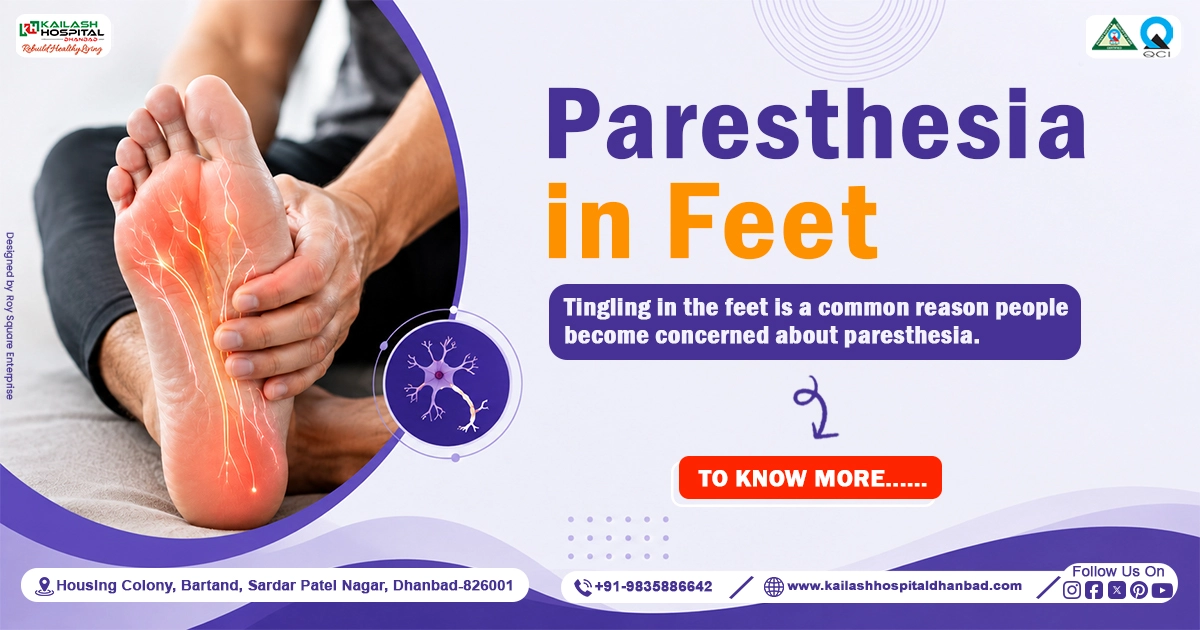
Tingling in the feet is a common reason people become concerned about paresthesia.
It may feel like:
- Pins and needles in the toes
- Burning in the soles
- Numbness in the feet
- Reduced sensitivity
- Prickling sensations
- A feeling that the feet are “asleep”
- Tingling that travels upward into the legs
Several conditions can cause these symptoms. Diabetes and peripheral neuropathy are important possibilities, while problems involving the lower back can also affect nerves traveling into the legs.
If foot tingling happens occasionally after sitting in an awkward position and disappears quickly, it may be temporary.
But if the sensation keeps returning, lasts for a long time, affects both feet, or occurs with pain or weakness, it is worth discussing with a healthcare professional.
5. Paresthesia Symptoms You Should Know
Paresthesia itself is a sensation, but additional symptoms may provide important information about the underlying problem.
Watch for:
Mild Tingling
A temporary pins-and-needles sensation may occur after pressure on a nerve.
Persistent Numbness
Ongoing loss or reduction of sensation deserves medical assessment.
Burning Pain
Burning or uncomfortable sensations may occur with certain peripheral nerve conditions.
Radiating Pain
Pain or tingling that travels from the back into the buttock, leg, arm or hand may suggest nerve irritation or compression.
Muscle Weakness
Weakness alongside numbness or tingling can be a sign that a nerve is being affected more significantly.
Balance or Walking Problems
Difficulty walking or maintaining balance alongside sensory changes should not be ignored.
The combination of symptoms is often more useful diagnostically than tingling alone.
6. How Is Paresthesia Diagnosed?
There is no single test that can diagnose every case of paresthesia. Doctors generally begin by understanding the patient’s symptoms and medical history.
- Medical History
Your doctor may ask:
- When did the tingling begin?
- Where exactly do you feel it?
- Is it constant or occasional?
- Does it become worse while sitting, standing or walking?
- Do you have back or neck pain?
- Is there weakness?
- Have you experienced an injury?
- Do you have diabetes or another medical condition?
Physical and Neurological Examination
The doctor may check:
- Muscle strength
- Reflexes
- Sensation
- Coordination
- Balance
- Walking pattern
Blood Tests
Depending on your symptoms, blood tests may be recommended to look for conditions such as blood glucose abnormalities or nutritional deficiencies.
Imaging Tests
If a spinal or structural cause is suspected, imaging such as X-rays or MRI may be considered.
Nerve Tests
Electromyography (EMG) and nerve conduction studies may be used in selected cases to assess nerve and muscle function.
The tests chosen depend on the patient’s symptoms and the suspected underlying cause.
7. Paresthesia Treatment Options
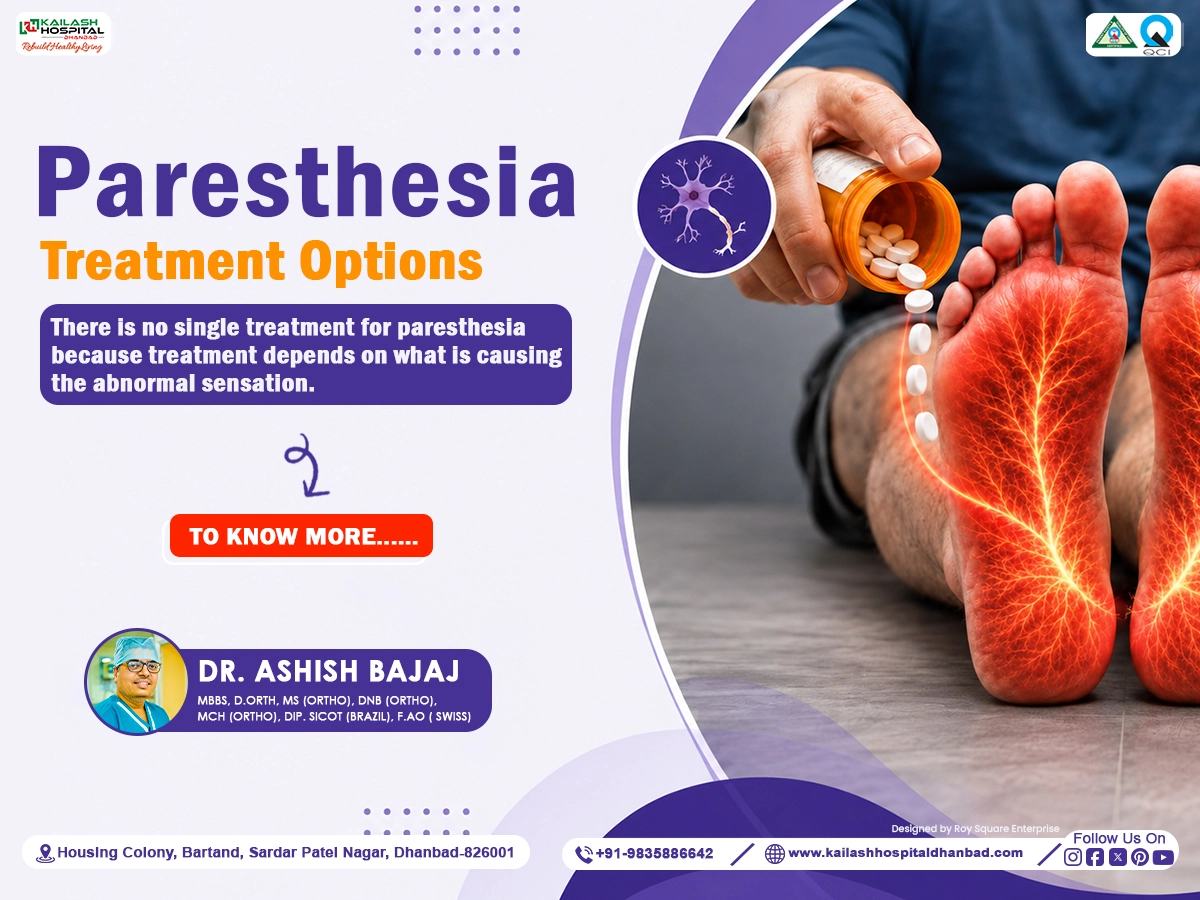
There is no single treatment for paresthesia because treatment depends on what is causing the abnormal sensation.
Treating the Underlying Condition
If diabetes, vitamin deficiency, nerve injury, or another medical condition is responsible, treating that condition becomes an important part of management.
Physical Therapy
When symptoms are related to certain musculoskeletal or nerve-compression conditions, physical therapy may help improve:
- Flexibility
- Strength
- Posture
- Mobility
- Core stability
Activity Modification
Avoiding positions or activities that repeatedly place pressure on a nerve may help in appropriate cases.
Medicines
Depending on the cause, a doctor may recommend medicines to manage pain, inflammation, or nerve-related symptoms.
Spine-Focused Treatment
If paresthesia is associated with a spinal problem, treatment may range from conservative care and physiotherapy to targeted procedures or surgery in selected cases.
Surgical Treatment
Surgery is not required for most cases of paresthesia. However, when significant nerve compression is caused by a structural problem and symptoms do not respond adequately to appropriate non-surgical treatment, a surgical procedure may sometimes be considered.
The treatment plan should always be based on the diagnosis rather than the symptom alone.
8. When Should You See a Doctor?
Occasional tingling caused by sitting awkwardly may disappear on its own. However, you should consider seeing a doctor if paresthesia:
- Happens frequently
- Lasts for a prolonged period
- Gradually becomes worse
- Affects your daily activities
- Occurs with back or neck pain
- Is associated with weakness
- Causes difficulty walking or maintaining balance
- Develops after an injury
- Keeps affecting the same area without an obvious reason
When Is It an Emergency?
Sudden numbness, particularly when accompanied by weakness, paralysis, confusion, difficulty speaking, dizziness, or a sudden severe headache, requires emergency medical attention because serious neurological conditions can sometimes present this way.
Do not wait for symptoms to disappear if they are sudden and severe.
9. Can Paresthesia Be Prevented?
Not every cause of paresthesia can be prevented. However, certain healthy habits may help reduce some risk factors.
Maintain a Healthy Lifestyle
Regular physical activity and maintaining a healthy weight can support overall musculoskeletal and nerve health.
Avoid Prolonged Pressure on Nerves
Change positions regularly, especially if your work requires sitting or standing for long periods.
Follow Good Posture
Good sitting and working posture may help reduce unnecessary stress on the neck and back.
Manage Existing Health Conditions
People with diabetes or other conditions that can affect nerves should follow their healthcare professional’s treatment plan.
Eat a Balanced Diet
A varied diet can help provide essential nutrients needed for normal body and nerve function.
Protect Yourself From Injury
Use appropriate precautions during sports, exercise, and physically demanding activities.
Prevention is not always possible, but recognizing symptoms early can make it easier to identify and manage the underlying problem.
10. When to See an Orthopedic Specialist
If tingling or numbness is accompanied by back pain, neck pain, radiating pain, weakness or movement difficulties, an orthopedic or spine evaluation may be appropriate.
An orthopedic specialist can assess whether the symptoms may be associated with:
- Nerve compression
- Disc-related problems
- Spinal changes
- Musculoskeletal conditions
- Previous injuries
- Other orthopedic causes
At Kailash Hospital, Dhanbad, Dr Ashish Bajaj, Consultant Orthopedic and Joint Replacement & Arthroscopy Specialist, can evaluate appropriate orthopedic and spine-related concerns and guide patients toward suitable treatment based on their individual condition.
Remember that not every case of paresthesia comes from the spine. A proper assessment is important to identify the actual cause.
Why Choose Kailash Hospital, Dhanbad?
Persistent numbness, tingling, or paresthesia should not be ignored. Kailash Hospital, Dhanbad offers specialist evaluation for spine and orthopedic conditions. Dr Ashish Bajaj, Consultant Orthopedic and Joint Replacement & Arthroscopy Specialist, can assess possible nerve compression, spinal problems, and related conditions and guide patients toward suitable treatment.
Conclusion
Paresthesia can cause tingling, numbness, burning, or pins-and-needles sensations. While temporary symptoms may resolve on their own, persistent or worsening paresthesia may indicate nerve compression, spinal problems, diabetes, or other conditions.
Early diagnosis can help identify the cause and support appropriate paresthesia treatment. If symptoms persist or occur with pain, weakness, or walking difficulties, consult a specialist.
1. What is paresthesia?
Paresthesia means tingling, numbness, burning, or pins-and-needles sensations.
2. Is paresthesia dangerous?
Usually not, but persistent or unexplained symptoms need medical evaluation.
3. What causes tingling in the feet?
Common causes include nerve pressure, diabetes, neuropathy, B12 deficiency, and spinal problems.
4. Can spine problems cause paresthesia?
Yes, nerve compression from disc problems can cause tingling, numbness, pain, or weakness.
5. Can paresthesia go away?
Temporary paresthesia may resolve, but recurring symptoms should be evaluated.
6. Is paresthesia the same as neuropathy?
No. Paresthesia is a sensation, while neuropathy involves nerve damage or dysfunction.
7. How is paresthesia diagnosed?
Doctors may use physical exams, blood tests, MRI, EMG, or nerve conduction tests.
8. Does paresthesia require surgery?
Not always. Treatment depends on the underlying cause.
9. When should I see a doctor for tingling?
Seek medical advice if tingling is persistent, worsening, painful, or associated with weakness.
10. Which specialist treats spine-related paresthesia?
An orthopedic or spine specialist can evaluate nerve compression and related spine conditions.