





Menstrual health plays a crucial role in a woman’s overall well-being, yet menstrual disorders are often ignored or normalized. Irregular periods, excessive bleeding, or severe pain are not something women should “just live with.” With early diagnosis and the right treatment approach, menstrual disorders can be effectively managed, restoring comfort, confidence, and reproductive health.
This comprehensive guide explains menstrual disorder treatment in a simple, informative way—helping women understand symptoms, causes, treatment options, and when to seek expert care.
1. What Are Menstrual Disorders?
Menstrual disorders refer to conditions that affect the regularity, duration, flow, or pain level of a woman’s menstrual cycle. These disorders can occur at any stage of life—from adolescence to menopause—and may interfere with daily activities, emotional health, and fertility.
Healthy menstrual cycles are a sign of good reproductive health. Any persistent change should be evaluated rather than ignored.
2. Common Types of Menstrual Disorders
Some of the most common menstrual disorders include:
- Irregular periods – cycles that vary significantly in length
- Menorrhagia – excessively heavy or prolonged bleeding
- Dysmenorrhea – painful periods with cramps
- Amenorrhea – absence of menstruation
- Oligomenorrhea – infrequent periods
- Premenstrual Syndrome (PMS)
- Premenstrual Dysphoric Disorder (PMDD)
Each condition requires a personalized treatment approach.
3. Common Symptoms to Watch For
Menstrual disorders may present with one or more of the following symptoms:
- Heavy bleeding lasting more than 7 days
- Severe abdominal or lower back pain
- Irregular or missed periods
- Passing large blood clots
- Extreme fatigue or weakness
- Mood swings, anxiety, or irritability
- Headaches or nausea during periods
Persistent symptoms should never be considered “normal.”
4. Causes of Menstrual Disorders
Menstrual disorders often develop due to underlying health or hormonal issues, such as:
- Hormonal imbalance
- Polycystic Ovary Syndrome (PCOS/PCOD)
- Thyroid disorders
- Uterine fibroids or polyps
- Endometriosis
- Stress and lifestyle imbalance
- Sudden weight gain or weight loss
5. Possible Risk Factors
Certain factors increase the likelihood of menstrual disorders, including:
- Teenage years and perimenopause
- Obesity or being underweight
- Family history of menstrual problems
- Chronic stress
- Sedentary lifestyle
- Poor nutrition
- Medical conditions like diabetes or thyroid disease
Understanding risk factors allows for early intervention.
6. Diagnosis of Menstrual Disorders
Accurate diagnosis begins with a detailed medical evaluation, which may include:
- Menstrual history and symptom assessment
- Physical and pelvic examination
- Blood tests to check hormone levels and anemia
- Ultrasound imaging of uterus and ovaries
- Pap smear or endometrial evaluation when required
Early diagnosis leads to faster recovery and better outcomes.
7. Treatment Options for Menstrual Disorders
Treatment is tailored based on age, symptoms, cause, and reproductive goals. Common options include:
Medical Treatment
- Hormonal therapy to regulate cycles
- Pain management medications
- Treatment for thyroid or metabolic disorders
Lifestyle Modifications
- Balanced diet and weight management
- Regular exercise
- Stress reduction techniques
Advanced & Surgical Treatments
- Minimally invasive procedures for fibroids or abnormal bleeding
- Fertility-preserving treatment options when needed
Treatment plans are always personalized for long-term relief.
8. Possible Complications If Left Untreated
Ignoring menstrual disorders may lead to serious health issues such as:
- Chronic anemia
- Fatigue and weakness
- Fertility problems
- Worsening pelvic pain
- Emotional stress and reduced quality of life
Timely treatment prevents long-term complications.
9. Recovery & Long-Term Management
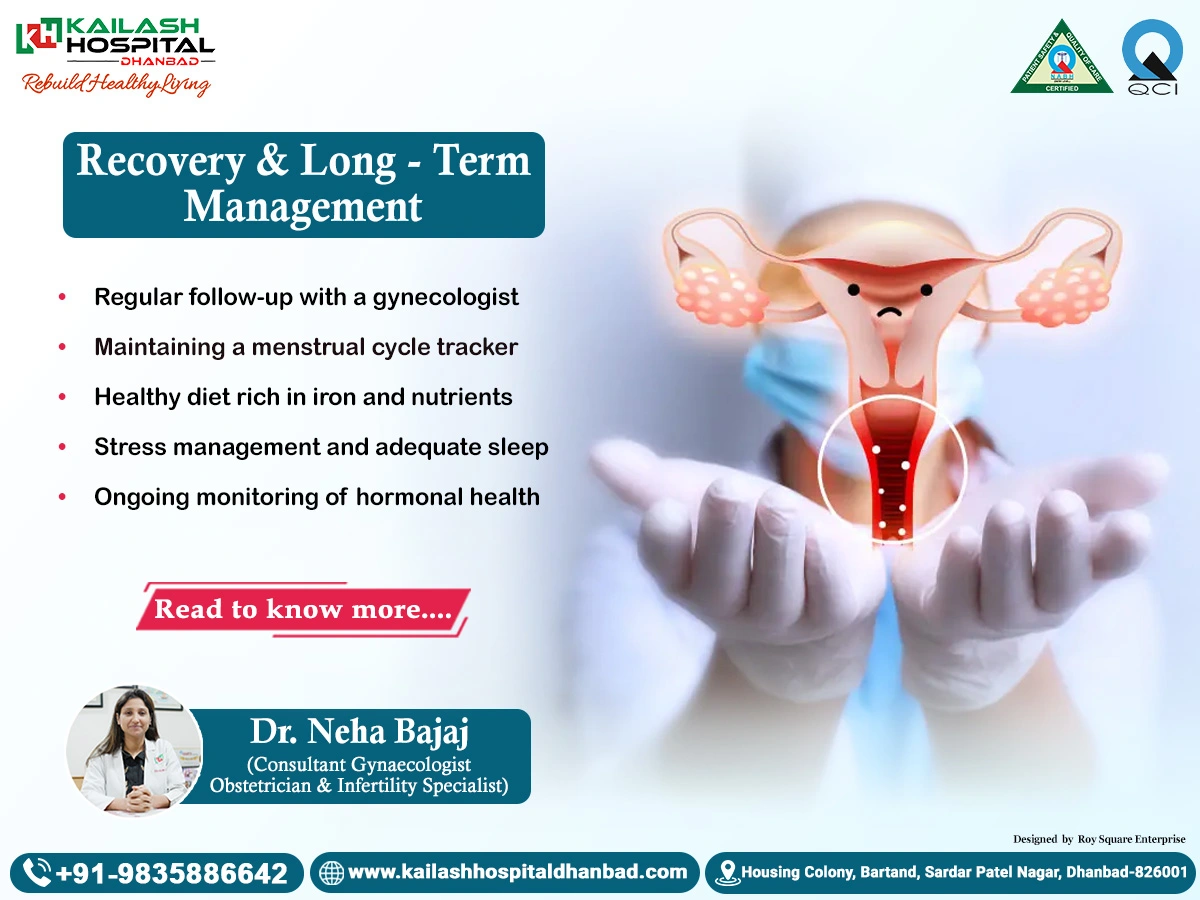
Recovery depends on the cause and treatment method. Long-term management includes:
- Regular follow-up with a gynecologist
- Maintaining a menstrual cycle tracker
- Healthy diet rich in iron and nutrients
- Stress management and adequate sleep
- Ongoing monitoring of hormonal health
Consistency is key to sustained menstrual health.
10. When to See a Doctor (Expert Insight)
You should consult a specialist if:
- Periods are excessively heavy or painful
- Menstrual cycles are consistently irregular
- Periods stop unexpectedly
- Symptoms affect daily life
Dr. Neha Bajaj, Consultant Gynaecologist, Obstetrician, and Fertility Specialist at Kailash Hospital, Dhanbad, emphasizes that early evaluation ensures effective treatment and prevents future complications.
Under the guidance Dr. Neha Bajaj, women receive compassionate, personalized care tailored to both medical and emotional needs.
11. Why Choose Kailash Hospital, Dhanbad?
- Experienced gynecology specialists
- Advanced diagnostic facilities
- Personalized women’s healthcare
- Compassionate patient-centered approach
- Expert care under Dr. Neha Bajaj
Kailash Hospital is trusted for comprehensive women’s health services.
12. Conclusion
Menstrual disorders are common—but they are not something women must silently endure. With the right diagnosis, expert care, and personalized treatment, menstrual health can be restored and maintained.
If you are experiencing persistent menstrual concerns, seeking timely care at Kailash Hospital, Dhanbad, under the guidance Dr. Neha Bajaj, ensures effective treatment, emotional reassurance, and long-term well-being.
1. Are menstrual disorders common?
Yes, they affect many women at different life stages.
2. Can menstrual disorders affect fertility?
Yes, some conditions may impact fertility if untreated.
3. Is heavy bleeding always abnormal?
Heavy bleeding for more than 7 days should be evaluated.
4. Can stress cause menstrual irregularities?
Yes, stress can disrupt hormonal balance.
5. Are hormonal treatments safe?
When prescribed by a specialist, they are safe and effective.
6. Can lifestyle changes improve symptoms?
Yes, diet, exercise, and stress control help significantly.
7. Do menstrual disorders require surgery?
Only in select cases; most are managed medically.
8. Is treatment different for teenagers and adults?
Yes, treatment is age-specific and individualized.
9. How long does treatment take to work?
Improvement may be seen within a few cycles.
10. When should I seek urgent care?
If bleeding is excessive or pain is unbearable.