




Healthy bones and flexible joints are the foundation of an active, pain-free life. From walking and bending to lifting and daily movements, our bones and joints support every action we perform. Unfortunately, due to aging, lifestyle changes, injuries, or medical conditions, bone and joint problems are becoming increasingly common.
This comprehensive guide on Bone & Joint Care is designed to help you understand common conditions, causes, treatments, and preventive strategies—so you can take timely action and maintain lifelong mobility.
1. Introduction to Bone & Joint Care
Bone and joint care focuses on maintaining the strength of bones and the flexibility of joints throughout life. As we age, natural wear and tear, poor posture, and lack of physical activity can weaken bones and strain joints. Early awareness and proper orthopedic care can prevent long-term disability and chronic pain.
With expert guidance and timely treatment, many bone and joint conditions can be effectively managed or even prevented.
2. Understanding Bone & Joint Health
Bones form the structural framework of the body, while joints connect bones and allow movement. Supporting tissues such as ligaments, tendons, cartilage, and muscles play a vital role in smooth motion and stability.
Good bone and joint health depends on:
- Adequate nutrition (calcium, vitamin D)
- Regular physical activity
- Balanced body weight
- Early diagnosis of orthopedic issues
Ignoring joint pain or stiffness can lead to long-term complications.
3. Common Bone & Joint Conditions
Some of the most frequently seen orthopedic conditions include:
- Osteoarthritis – Degeneration of joint cartilage causing pain and stiffness
- Rheumatoid Arthritis – Autoimmune joint inflammation
- Osteoporosis – Weak and brittle bones
- Back and Neck Pain – Often due to posture or spinal issues
- Sports Injuries – Ligament tears, muscle strain
- Fractures – Due to trauma or bone weakness
Early management significantly improves outcomes.
4. Diagnosis of Bone & Joint Conditions
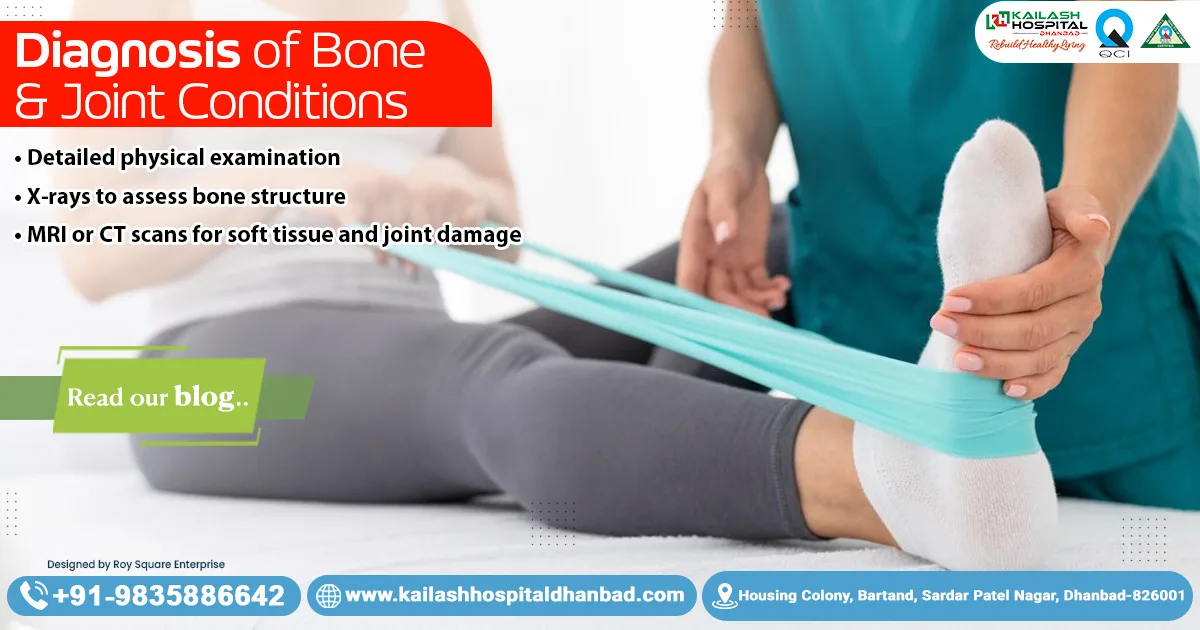
Accurate diagnosis is the first step toward effective treatment. Orthopedic specialists use a combination of:
- Detailed physical examination
- X-rays to assess bone structure
- MRI or CT scans for soft tissue and joint damage
- Bone density tests
- Blood tests for inflammatory conditions
At Kailash Hospital, Dhanbad, advanced diagnostic tools ensure precise evaluation and timely care.
5. Causes of Bone & Joint Problems
Bone and joint disorders may develop due to:
- Aging and natural wear and tear
- Poor posture and sedentary lifestyle
- Nutritional deficiencies
- Obesity and excess joint pressure
- Previous injuries or trauma
- Genetic predisposition
Identifying the cause helps in planning personalized treatment.
6. Non-Surgical Bone & Joint Care Treatments
Not all bone and joint conditions require surgery. Many patients benefit from conservative treatments such as:
- Pain-relief and anti-inflammatory medications
- Joint lubrication injections
- Lifestyle modifications
- Weight management
- Posture correction
- Activity modification
Under expert supervision, non-surgical care can significantly reduce pain and restore mobility.
7. Role of Physiotherapy & Rehabilitation
Physiotherapy is a cornerstone of bone and joint recovery. It helps in:
- Improving joint flexibility
- Strengthening muscles
- Reducing stiffness and pain
- Faster post-injury or post-surgery recovery
- Preventing recurrence of injury
Customized rehabilitation programs are often recommended alongside medical treatment.
8. Preventive Tips for Healthy Bones & Joints
Prevention is always better than cure. Simple daily habits can protect your bones and joints:
- Eat a calcium-rich, balanced diet
- Ensure adequate vitamin D exposure
- Engage in regular low-impact exercise
- Maintain a healthy body weight
- Avoid smoking and excessive alcohol
- Do not ignore early signs of pain or stiffness
Consistency is key to long-term bone health.
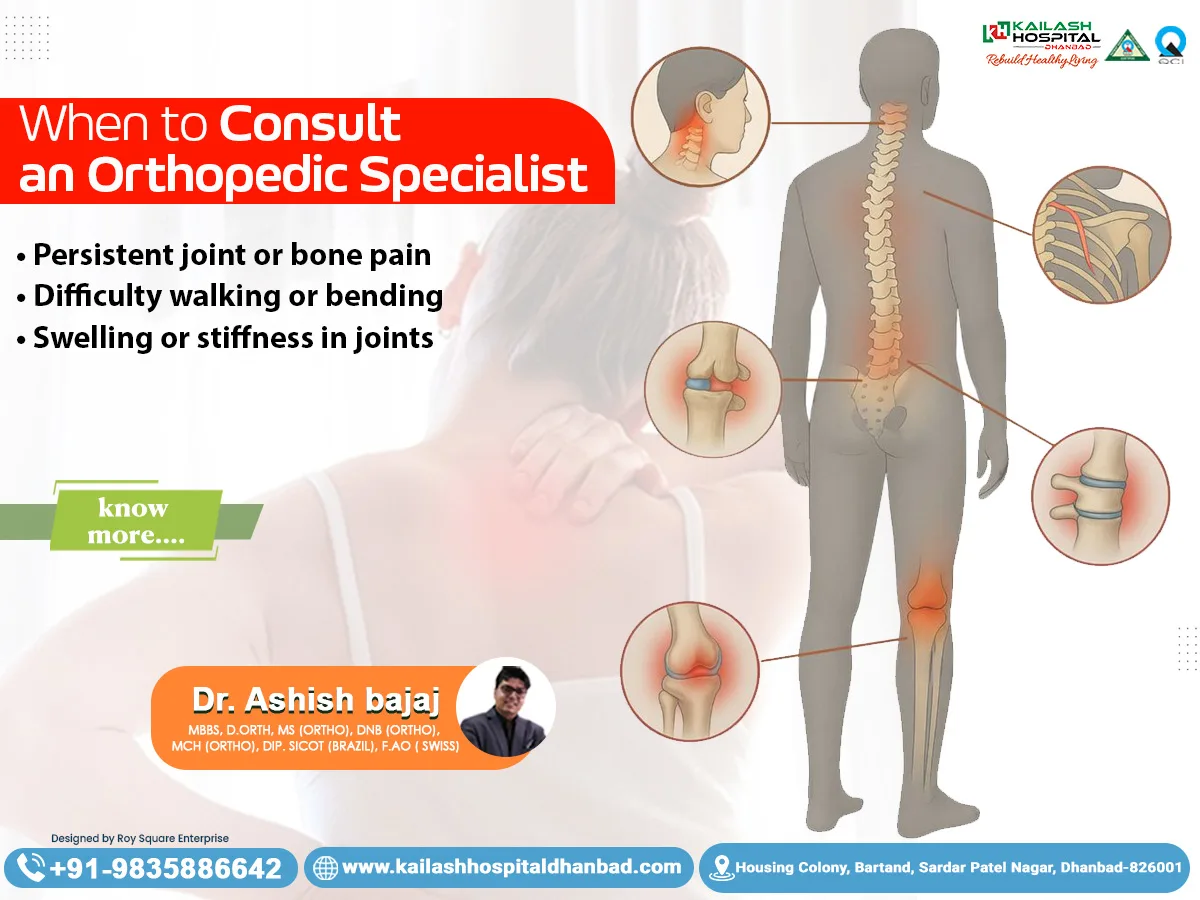
9. When to Consult an Orthopedic Specialist
- Persistent joint or bone pain
- Difficulty walking or bending
- Swelling or stiffness in joints
- Recurrent injuries
- Sudden fractures or trauma
Dr. Ashish Bajaj, Consultant Orthopedic and Joint Replacement & Arthroscopy Specialist at Kailash Hospital, Dhanbad, emphasizes that early orthopedic consultation can prevent complications and reduce the need for major surgery. His patient-centric approach focuses on accurate diagnosis and personalized care.
10. Why Choose Kailash Hospital, Dhanbad
Kailash Hospital, Dhanbad is a trusted center for comprehensive orthopedic care, offering:
- Experienced specialist Dr. Ashish Bajaj
- Advanced diagnostic facilities
- Non-surgical and surgical treatment options
- Joint replacement and arthroscopy expertise
- Patient-focused, compassionate care
The hospital follows a multidisciplinary approach to ensure the best outcomes.
11. Conclusion
Bone and joint health plays a vital role in maintaining independence and quality of life. Ignoring pain or stiffness can lead to long-term disability, while early diagnosis and expert care can restore mobility and comfort.
With the guidance Dr. Ashish Bajaj, Consultant Orthopedic and Joint Replacement & Arthroscopy Specialist at Kailash Hospital, Dhanbad, patients receive reliable, advanced, and compassionate orthopedic care. Prioritize your bone and joint health today—for a stronger, more active tomorrow.
1. Is joint pain a normal part of aging?
Mild stiffness can occur, but persistent pain is not normal and should be evaluated.
2. Can bone and joint problems be treated without surgery?
Yes, many conditions respond well to medications, physiotherapy, and lifestyle changes.
3. How important is physiotherapy?
Physiotherapy is crucial for recovery, mobility improvement, and pain reduction.
4. When is joint replacement surgery needed?
When pain severely limits daily activities and conservative treatment fails.
5. Can young people have joint problems?
Yes, due to sports injuries, poor posture, or genetic factors.
6. Are fractures always serious?
Some heal easily, but repeated fractures may indicate bone weakness.
7. How can osteoporosis be detected early?
Through bone density testing and regular health check-ups.
8. Is walking good for joint health?
Yes, low-impact exercises like walking strengthen joints.
9. Can weight affect joint pain?
Excess weight increases pressure on joints, especially knees and hips.
10. How often should I see an orthopedic doctor?
Visit if pain persists for more than a few weeks or limits daily activity.