





Introduction
Heel pain is one of the most common foot-related problems affecting people of all age groups. From athletes and working professionals to elderly individuals, anyone can experience heel discomfort at some point in life. The pain may start gradually or suddenly and can make simple daily activities like walking, climbing stairs, or standing for long periods extremely uncomfortable.
Ignoring heel pain for a long time can worsen the condition and affect mobility and quality of life. Understanding the causes, symptoms, diagnosis, and treatment options is essential for early recovery and long-term relief.
According to expert Dr. Ashish Bajaj, Consultant Orthopedic and Joint Replacement, Arthroscopy at Kailash Hospital, Dhanbad, timely diagnosis and proper treatment can significantly reduce complications and help patients regain an active lifestyle faster.
1. What Is Heel Pain?
Heel pain refers to discomfort or inflammation occurring under, behind, or around the heel bone. The heel is the largest bone in the foot and absorbs significant pressure during walking, running, and standing. When the tissues, tendons, ligaments, or nerves surrounding the heel become damaged or inflamed, pain develops.
Heel pain can range from mild irritation to severe stabbing pain that interferes with daily activities. It may affect one foot or both feet depending on the underlying condition.
2. Common Causes of Heel Pain
There are several reasons why heel pain develops. Identifying the exact cause helps in choosing the right treatment.
Plantar Fasciitis
Plantar fasciitis is the leading cause of heel pain. It occurs when the plantar fascia tissue becomes inflamed due to overuse or strain.
Common Symptoms:
- Sharp pain in the morning
- Pain after long standing
- Tenderness under the heel
Heel Spurs
Heel spurs are calcium deposits forming bony growths on the heel bone due to prolonged strain.
Symptoms:
- Chronic heel discomfort
- Pain while walking
- Swelling near the heel
Achilles Tendinitis
Inflammation of the Achilles tendon causes pain behind the heel, especially in athletes and runners.
Symptoms:
- Heel stiffness
- Swelling
- Pain during movement
Bursitis
Bursitis occurs when fluid-filled sacs near the heel become inflamed due to repeated pressure.
Symptoms:
- Redness
- Swelling
- Tenderness
Stress Fractures
Repeated stress on the heel bone can lead to tiny fractures.
Symptoms:
- Deep aching pain
- Difficulty walking
- Pain worsening with activity
- Tarsal Tunnel Syndrome
Compression of nerves near the ankle may result in heel pain, tingling, or numbness.
3. Symptoms of Heel Pain
Heel pain symptoms may vary depending on the underlying cause.
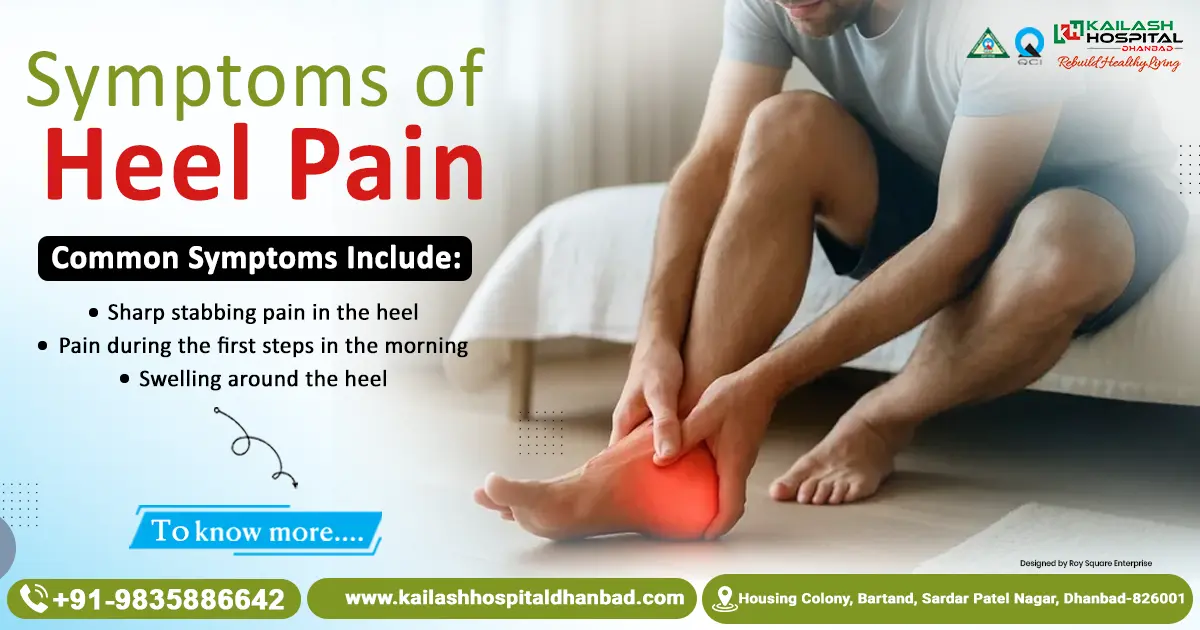
Common Symptoms Include:
- Sharp stabbing pain in the heel
- Pain during the first steps in the morning
- Swelling around the heel
- Burning sensation
- Tenderness while touching the heel
- Difficulty standing or walking
- Stiffness after rest
- Pain after exercise
If symptoms continue for weeks, medical consultation becomes necessary.
4. Risk Factors for Heel Pain
Major Risk Factors:
- Obesity or excess body weight
- Standing for long hours
- Wearing improper footwear
- Flat feet or high arches
- Excessive sports activities
- Aging
- Diabetes
- Running on hard surfaces
- Tight calf muscles
As explained Dr. Ashish Bajaj, Consultant Orthopedic and Joint Replacement, Arthroscopy at Kailash Hospital, Dhanbad, lifestyle habits and poor foot care are among the major contributors to chronic heel pain problems.
5. How Heel Pain Is Diagnosed
Proper diagnosis is important to identify the root cause of heel pain.
Physical Examination
The doctor checks:
- Tenderness
- Swelling
- Foot movement
- Walking pattern
Imaging Tests
X-Ray
Helps detect heel spurs or fractures.
MRI Scan
Useful for identifying soft tissue injuries and inflammation.
Ultrasound
Detects tendon or ligament damage.
CT Scan
Provides detailed images of bone-related issues.
Early diagnosis helps avoid long-term complications and speeds up recovery.
6. Best Treatment Options for Heel Pain
Treatment depends on the severity and cause of the condition.
Rest and Activity Modification
Reducing activities that put pressure on the heel allows healing.
Medications
Pain relievers and anti-inflammatory medicines help reduce swelling and discomfort.
Ice Therapy
Applying ice packs for 15–20 minutes several times daily reduces inflammation.
Physical Therapy
Stretching and strengthening exercises improve flexibility and support healing.
Orthopedic Footwear
Special shoes, heel pads, and insoles reduce pressure on the heel.
Steroid Injections
For severe pain, corticosteroid injections may provide temporary relief.
Shockwave Therapy
This advanced therapy stimulates healing in chronic heel pain conditions.
According to Dr. Ashish Bajaj, Consultant Orthopedic and Joint Replacement, Arthroscopy at Kailash Hospital, Dhanbad, most heel pain cases improve successfully with non-surgical treatments when addressed early.
7. Exercises for Heel Pain
Regular stretching and strengthening exercises can help relieve heel pain and prevent recurrence.
Calf Stretch
Improves flexibility and reduces stress on the heel.
How to Perform:
- Stand facing a wall
- Keep one leg behind
- Stretch the calf for 20 seconds
Toe Stretch
Helps relax the plantar fascia tissue.
Heel Raises
Strengthens foot and ankle muscles.
Rolling Exercise
Roll your foot over a cold water bottle or tennis ball for relief.
Towel Stretch
Improves mobility and reduces stiffness.
Perform exercises gently and consistently for better results.

8. Prevention Tips for Heel Pain
Preventing heel pain is easier than treating chronic conditions.
Effective Prevention Tips:
- Wear comfortable and supportive footwear
- Maintain a healthy body weight
- Stretch before exercise
- Avoid standing for prolonged periods
- Replace worn-out shoes
- Use cushioned insoles
- Avoid excessive running on hard surfaces
- Keep foot muscles flexible
Simple lifestyle changes can greatly reduce the risk of heel pain.
9. When Should You See a Doctor?
You should consult a doctor if you experience:
- Severe heel pain
- Persistent swelling
- Difficulty walking
- Pain lasting more than two weeks
- Fever with heel pain
- Numbness or tingling
- Sudden injury to the foot
Early treatment can prevent worsening of symptoms and improve recovery.
Why Choose Kailash Hospital?
Choosing the right hospital and orthopedic specialist plays an important role in successful treatment and recovery.
Kailash Hospital, Dhanbad Offers:
- Experienced orthopedic specialists
- Advanced diagnostic facilities
- Personalized treatment plans
- Modern physiotherapy support
- Comprehensive joint and foot care
- Patient-focused treatment approach
Under the expert guidance of Dr. Ashish Bajaj, Consultant Orthopedic and Joint Replacement, Arthroscopy at Kailash Hospital, Dhanbad, patients receive comprehensive care for heel pain and other orthopedic conditions using modern treatment techniques and evidence-based medical care.
Conclusion
Heel pain may appear like a minor issue initially, but if left untreated, it can significantly impact mobility and daily life. Early diagnosis, proper footwear, stretching exercises, and timely treatment can help manage symptoms effectively and prevent long-term complications.
Whether the pain is caused by plantar fasciitis, heel spurs, or tendon inflammation, consulting an experienced orthopedic specialist is the best way to ensure accurate diagnosis and proper recovery.
With expert orthopedic care, advanced facilities, and patient-centered treatment, Kailash Hospital, Dhanbad provides effective solutions for heel pain and related foot conditions.
1. What is the most common cause of heel pain?
Plantar fasciitis is the most common cause of heel pain.
2. Can heel pain go away naturally?
Mild heel pain may improve with rest and proper care, but persistent pain requires medical attention.
3. Is walking good for heel pain?
Limited gentle walking may help, but excessive walking can worsen the pain.
4. Which shoes are best for heel pain?
Shoes with soft cushioning and good arch support are recommended.
5. Can obesity cause heel pain?
Yes, excess body weight increases pressure on the heel and foot tissues.
6. How long does heel pain last?
Recovery may take a few weeks to several months depending on the severity.
7. Are heel spurs always painful?
Not always. Some heel spurs may not cause symptoms unless inflammation occurs.
8. What exercises help relieve heel pain?
Calf stretches, heel raises, and rolling exercises are highly effective.
9. Is surgery necessary for heel pain?
Most cases improve without surgery. Surgery is recommended only for severe or chronic cases.
10. When should I visit an orthopedic doctor for heel pain?
Consult a doctor if pain persists for more than two weeks or affects daily activities.