





Hip Replacement Surgery: A Complete, Easy-to-Understand Guide
1. What is Hip Replacement Surgery?
Hip replacement surgery is a well-established procedure in which a damaged hip joint is replaced with an artificial implant. The goal is simple—relieve pain, restore movement, and help patients return to their normal daily life.
This surgery is most commonly recommended when joint damage becomes severe and non-surgical treatments no longer provide relief.
2. Types of Hip Replacement Surgery
Depending on the condition and severity, different surgical options are available:
- Total Hip Replacement (THR): Entire hip joint is replaced
- Partial Hip Replacement: Only the damaged portion is replaced
- Revision Hip Replacement: Replacement of an old or failed implant
- Minimally Invasive Hip Surgery: Smaller incision with quicker recovery
3. Causes That Lead to Hip Replacement
Several conditions can damage the hip joint over time:
- Osteoarthritis (age-related wear and tear)
- Rheumatoid arthritis
- Hip fractures due to injury
- Avascular necrosis (loss of blood supply to bone)
4. Symptoms You Should Not Ignore
Early signs are often ignored, which delays treatment:
- Persistent pain in the hip or groin
- Difficulty walking or climbing stairs
- Stiffness in the joint
- Pain even while resting
If these symptoms continue, it’s important to consult a specialist.
5. When Do You Need Hip Replacement?
Surgery is considered when:
- Pain becomes severe and constant
- Daily activities like sitting or walking are affected
- Medications and physiotherapy fail
- X-rays show significant joint damage
At this stage, expert evaluation becomes crucial. Specialist Dr Ashish Bajaj, Consultant Orthopedic and Joint Replacement, Arthroscopy at Kailash Hospital, Dhanbad carefully assess each case before recommending surgery.
6. Diagnosis & Tests
To confirm the condition, doctors may suggest:
- Physical examination
- X-ray imaging
- MRI or CT scan
- Blood tests (if needed)
A detailed diagnosis helps in planning the most effective treatment.
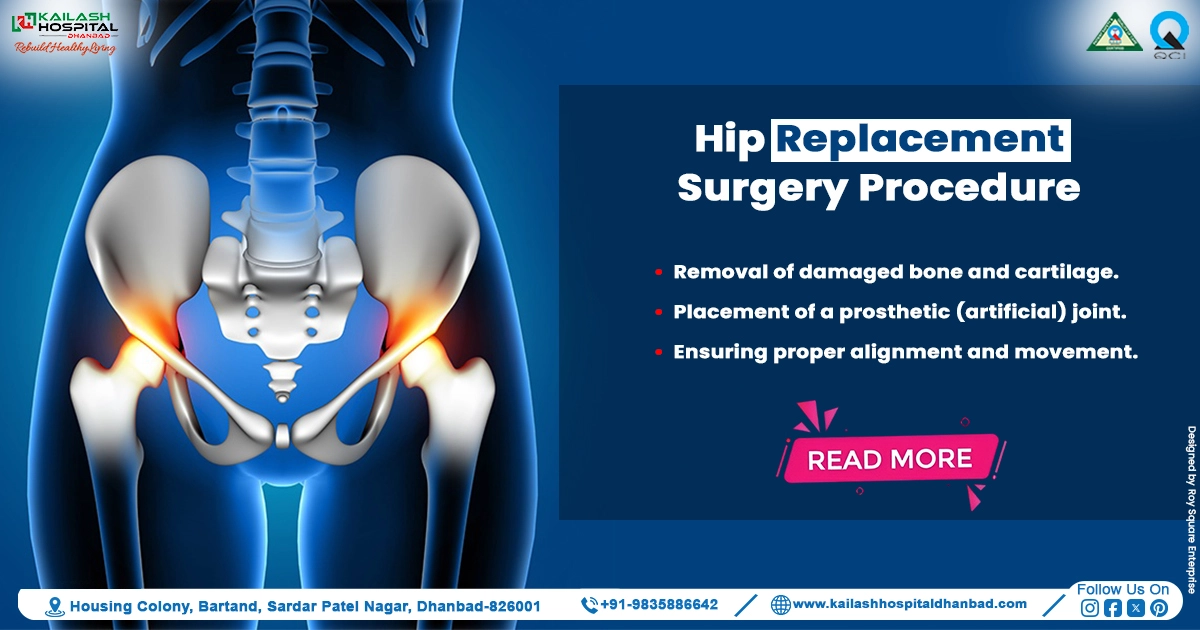
7. Hip Replacement Surgery Procedure
The procedure is performed under anesthesia and includes:
- Removal of damaged bone and cartilage
- Placement of a prosthetic (artificial) joint
- Ensuring proper alignment and movement
- Closing the incision
Duration: Usually 1–2 hours
Modern techniques ensure safety and precision during surgery.
8. Risks & Complications
Like any surgery, hip replacement has some risks, though they are uncommon:
- Infection
- Blood clots
- Joint dislocation
- Implant wear or loosening over time
Choosing an experienced surgeon significantly reduces these risks.
9. Recovery & Rehabilitation
Recovery begins soon after surgery:
- Patients are encouraged to walk within 24–48 hours
- Physiotherapy plays a key role
- Gradual return to normal activities
Full recovery typically takes 6–12 weeks, depending on overall health and care.
10. How to Choose the Best Orthopedic Doctor
- Look for experience in joint replacement surgeries
- Check patient reviews and success rates
- Ensure availability of advanced surgical facilities
- Choose a doctor who provides proper post-surgery care
Experienced professional Dr. Ashish Bajaj are known for their expertise in joint replacement and patient-centered care.

11. Why Choose Kailash Hospital
Choosing the right hospital ensures better outcomes and patient safety.
At Kailash Hospital, patients benefit from:
- Advanced orthopedic technology
- Skilled specialist Dr. Ashish Bajaj
- Comprehensive pre- and post-surgery care
- Focus on faster recovery and patient comfort
The hospital is trusted for delivering quality and compassionate care.
12. Conclusion
Hip replacement surgery has transformed the lives of countless patients suffering from chronic hip pain. With modern advancements and expert care, it offers a reliable path to a pain-free and active lifestyle.
If you are struggling with ongoing hip issues, consulting a qualified specialist at the right time can make all the difference. With the guidance of experienced Dr. Ashish Bajaj, Consultant Orthopedic and Joint Replacement, Arthroscopy at Kailash Hospital, Dhanbad, patients can look forward to safe treatment and a healthier future.
Q1. Is hip replacement surgery safe?
Yes, it is a commonly performed and safe procedure with high success rates.
Q2. How long does the surgery take?
Around 1–2 hours.
Q3. When can I walk after surgery?
6–12 weeks for most patients.
Q4. How long does recovery take?
6–12 weeks for most patients.
Q5. Will I have pain after surgery?
Mild discomfort initially, which improves with time.
Q6. How long does the implant last?
Typically 15–25 years.
Q7. Can I resume normal activities?
Yes, most patients return to daily routines.
Q8. Are there any restrictions after surgery?
Avoid high-impact activities initially.
Q9. Is physiotherapy necessary?
Yes, it is essential for proper recovery.
Q10. Who is the right candidate for this surgery?
Anyone with severe joint damage and persistent pain.