





1. Introduction
Robotic knee replacement is transforming the way orthopedic surgeons restore mobility and quality of life. With advanced precision, minimal invasiveness, and faster recovery outcomes, this technology is becoming a preferred choice among patients suffering from severe knee problems. At Kailash Hospital, Dhanbad, Dr. Ashish Bajaj, Consultant Orthopedic Specialist, is widely recognized for offering expert knee replacement care, including the latest robotic techniques.
In this comprehensive guide, you will learn everything you need to know before considering robotic knee replacement.
2. What Is Robotic Knee Replacement?
Robotic knee replacement is an advanced surgical procedure where technology assists the orthopedic surgeon in performing highly precise knee joint replacement.
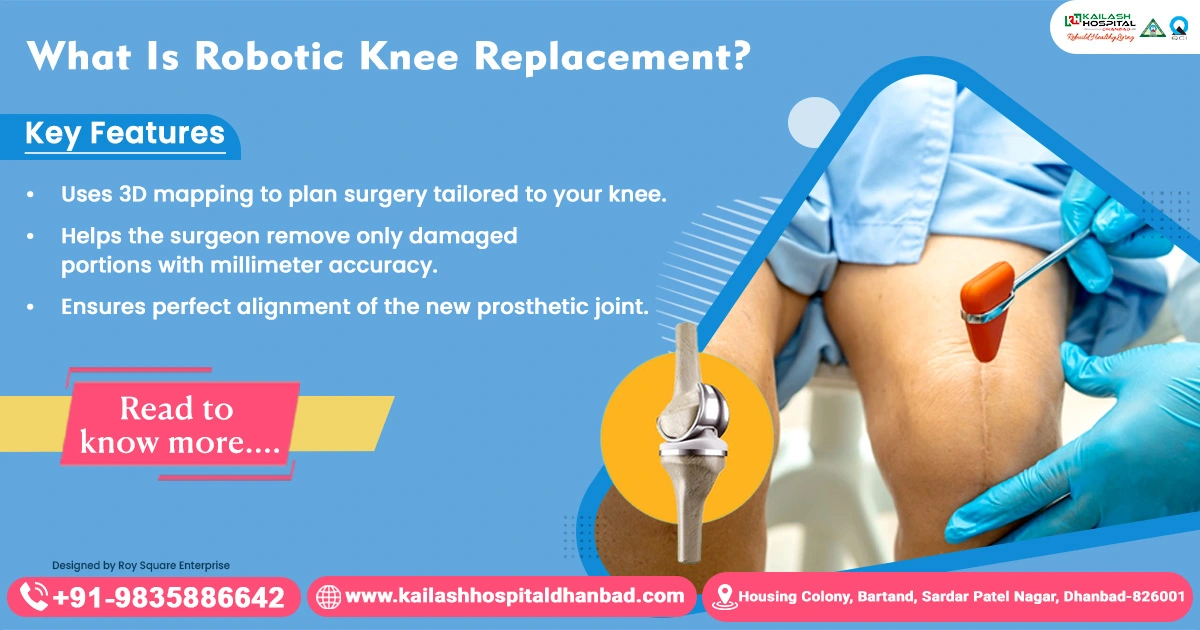
Key Features
- Uses 3D mapping to plan surgery tailored to your knee.
- Helps the surgeon remove only damaged portions with millimeter accuracy.
- Ensures perfect alignment of the new prosthetic joint.
- Results in less soft-tissue trauma, enhanced stability, and improved function.
Robotic assistance does not replace the surgeon—rather, it enhances their expertise. Experts like Dr. Ashish Bajaj at Kailash Hospital, Dhanbad, utilize robotic systems to ensure optimal outcomes for patients.
3. Symptoms That Indicate You May Need Knee Replacement
You may require knee replacement if you are experiencing:
- Severe knee pain that persists even at rest.
- Difficulty in walking, climbing stairs, or standing for long periods.
- Morning stiffness or swelling around the knee.
- Reduced range of motion.
- Pain that does not improve with medication or physiotherapy.
If these symptoms affect your daily life, consulting an orthopedic specialist like Ashish Bajaj can help you determine whether robotic knee replacement is right for you.
4. Types of Knee Replacement
1. Total Knee Replacement (TKR)
Both sides of the knee joint are replaced with prosthetic components.
2. Partial Knee Replacement (PKR)
Only the damaged portion of the knee is replaced—ideal for early-stage arthritis.
3. Robotic-Assisted Knee Replacement
Offers unmatched precision, improved alignment, and personalized implant positioning.
5. Causes Behind Severe Knee Problems
Knee joint damage may occur due to:
- Osteoarthritis (most common)
- Rheumatoid arthritis
- Post-traumatic arthritis
- Sports injuries
- Age-related wear and tear
- Genetic predisposition
- Obesity putting excess strain on the knee joint

6. Risk Factors
Certain factors increase your likelihood of needing knee replacement:
- Age above 50
- Family history of joint issues
- Previous knee injuries
- Excess weight
- High-impact physical activities
- Chronic inflammatory diseases
7. Diagnosis
To determine whether robotic knee replacement is suitable for you, doctors may perform:
- Physical examination
- X-rays
- MRI scans
- Blood tests
- Gait analysis
- Range-of-motion evaluation
Kailash Hospital, Dhanbad, uses advanced diagnostic tools to ensure accurate assessment and treatment planning.
8. Treatment Options
Before recommending robotic knee replacement, your doctor may try:
Non-Surgical Options
- Medications (NSAIDs, pain relievers)
- Physiotherapy
- Weight reduction
- Lifestyle modifications
- Injections (steroid, PRP)
- Knee braces or supports
Surgical Options
- Arthroscopy
- Partial knee replacement
- Total knee replacement
- Robotic-assisted knee replacement (most precise and advanced)
Robotic knee replacement is often recommended for patients seeking long-term relief, faster recovery, and improved mobility.
9. Recovery After Knee Replacement
Recovery after robotic knee replacement is typically quicker due to reduced tissue damage.
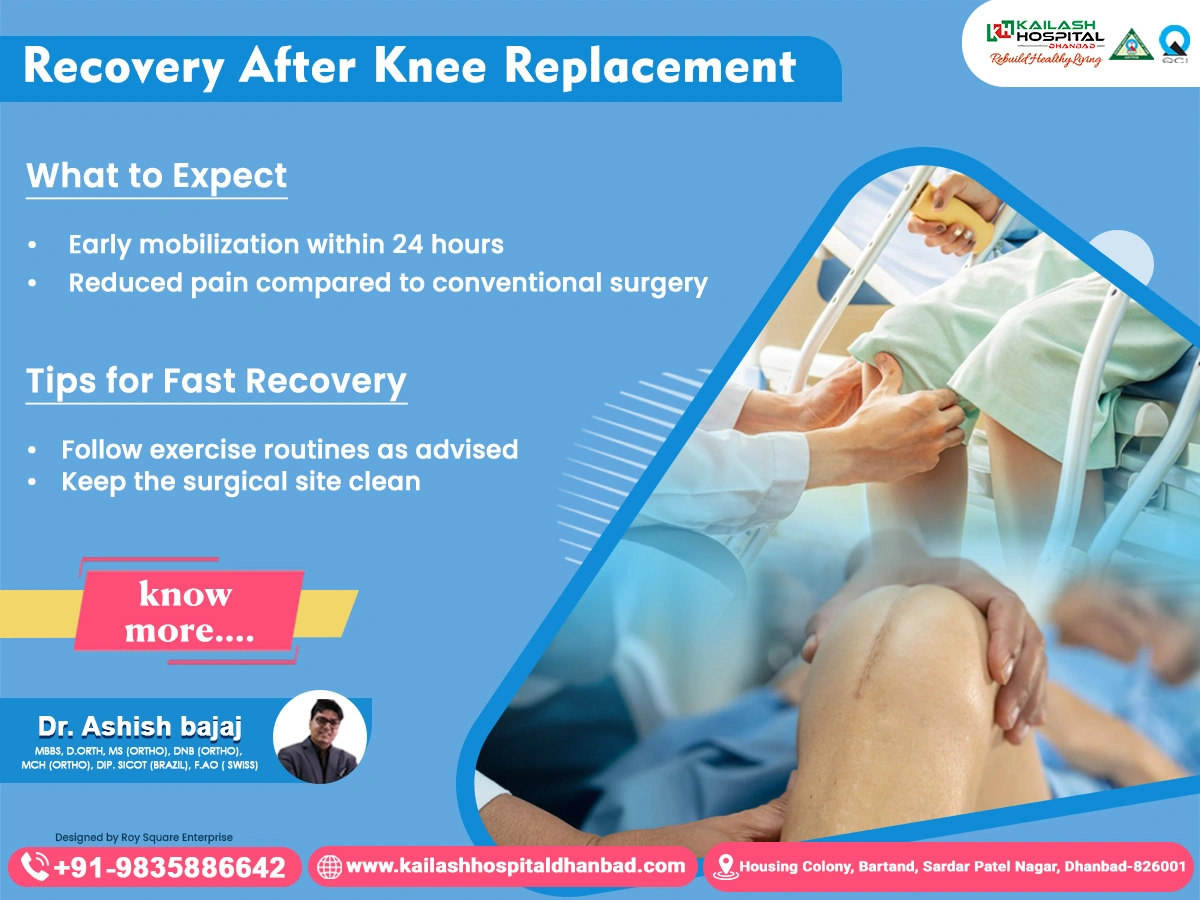
What to Expect
- Early mobilization within 24 hours
- Reduced pain compared to conventional surgery
- Better implant alignment ensures long-term durability
- Physiotherapy for 6–12 weeks
- Normal daily activities resume within 4–6 weeks
Tips for Fast Recovery
- Follow exercise routines as advised
- Keep the surgical site clean
- Maintain a balanced diet
- Take medications on time
- Attend all follow-up appointments
10. Possible Complications
Though robotic knee replacement is safe, all surgeries carry some risks:
- Infection
- Blood clots
- Implant loosening
- Nerve irritation
- Temporary stiffness
- Rare allergic reaction to implants
Choosing an experienced orthopedic surgeon greatly reduces complications.
12. Why Choose Kailash Hospital, Dhanbad?
Kailash Hospital, Dhanbad, is a trusted name for advanced orthopedic care.
Key Reasons
- Expert Orthopedic Surgeon: Dr. Ashish Bajaj, renowned for precise robotic and conventional knee replacement.
- Advanced Robotic Technology: Ensures accuracy, minimal pain, and quicker rehabilitation.
- Comprehensive Care: From diagnosis to physiotherapy under one roof.
- High Success Rate: Thousands of satisfied patients with restored mobility.
- Patient-Centered Approach: Personalized treatment plans tailored to each patient.
If you are considering robotic knee replacement, Kailash Hospital offers the perfect combination of expertise, technology, and compassionate care.
13. Conclusion
Robotic knee replacement is a breakthrough in orthopedic surgery, offering improved precision, faster healing, and long-term comfort for patients suffering from severe knee pain. With an experienced surgeon like Dr. Ashish Bajaj and advanced technology at Kailash Hospital, Dhanbad, you can confidently take the next step toward a pain-free and active life.
If knee pain is affecting your daily routine, don’t delay—consult an orthopedic expert and explore whether robotic knee replacement is the right solution for you.
1. Is robotic knee replacement better than traditional knee replacement?
Yes, it offers more precision, reduced pain, and faster recovery.
2. Is the robot performing the surgery?
No. The surgeon controls the robotic system throughout the procedure.
3. Who is a good candidate?
Patients with chronic knee pain, arthritis, or severe joint damage.
4. How long does the surgery take?
Usually 60–90 minutes.
5. Is it safe?
Yes. It is one of the most advanced and safe orthopedic surgeries today.
6. How long does the implant last?
Typically 15–20+ years, often longer with robotic precision.
7. Will I be able to walk again normally?
Full recovery may take 2–3 months.
8. What is the recovery time?
Full recovery may take 2–3 months.
9. Are follow-up visits necessary?
Yes, to ensure proper healing and implant function.
10. How painful is recovery?
Pain is significantly less due to reduced tissue damage.