




Ligament injuries are more common than many people realize and can significantly affect mobility, daily comfort, and long-term joint health if not treated correctly. Whether caused by sports, accidents, or sudden twists, timely and appropriate ligament injury treatment is essential for restoring stability and preventing future complications.
This comprehensive guide is written in a clear, patient-friendly, and professional tone to help you understand ligament injuries, modern treatment options, recovery, and when to seek expert orthopedic care.
1. What Is a Ligament Injury?
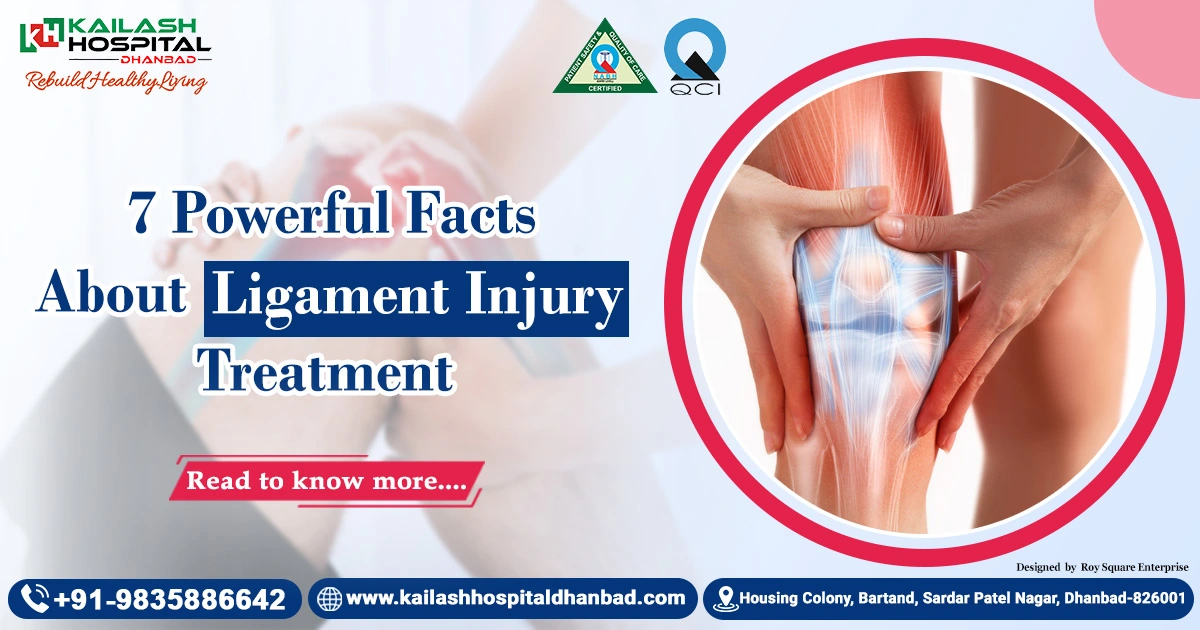
Ligaments are strong, fibrous bands of tissue that connect bones to each other and help maintain joint stability. A ligament injury occurs when these tissues are overstretched or torn due to sudden force, twisting, or impact.
Ligament injuries range from mild sprains to complete tears and can affect joints like the knee, ankle, shoulder, wrist, or elbow.
2. Importance of Ligaments in Joint Stability
Ligaments play a vital role in:
- Maintaining joint alignment
- Preventing excessive or abnormal movement
- Supporting smooth and controlled motion
When ligaments are damaged, joints may become unstable, increasing the risk of repeated injuries, pain, and long-term joint degeneration.
3. Common Types of Ligament Injuries
Ligament injuries are commonly classified into three grades:
- Grade I (Mild): Ligament stretched but not torn
- Grade II (Moderate): Partial tear with pain and swelling
- Grade III (Severe): Complete ligament rupture causing instability
Chronic ligament injuries may also develop due to repeated strain or inadequate healing.
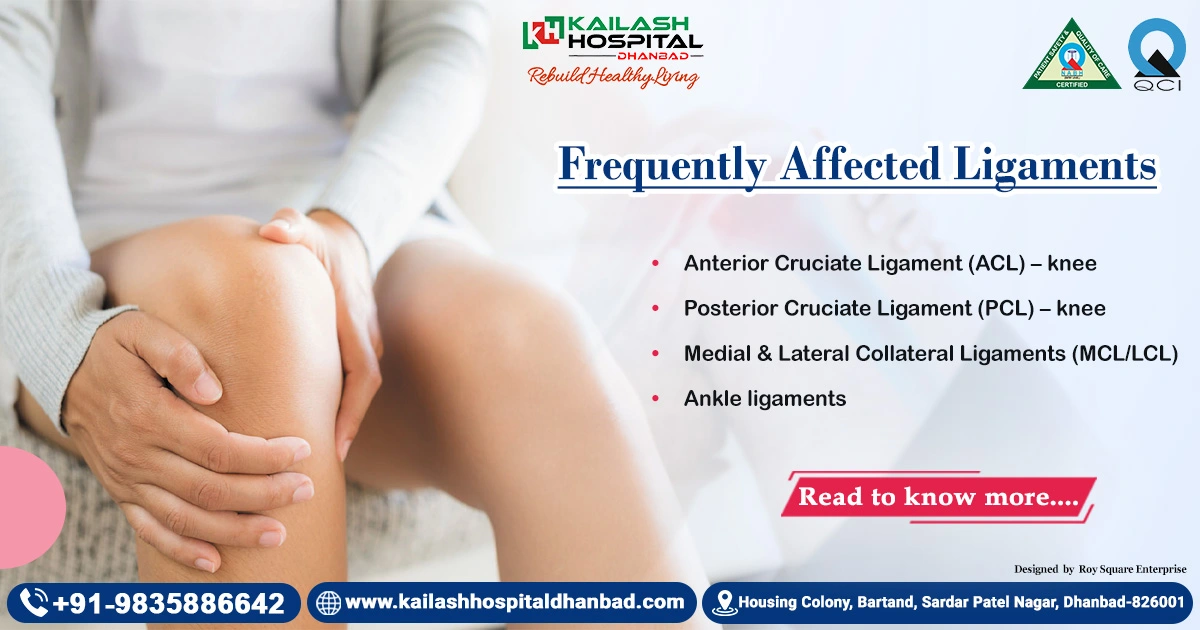
4. Frequently Affected Ligaments
Some ligaments are more prone to injury due to their role in weight-bearing and movement:
- Anterior Cruciate Ligament (ACL) – knee
- Posterior Cruciate Ligament (PCL) – knee
- Medial & Lateral Collateral Ligaments (MCL/LCL)
- Ankle ligaments
- Shoulder ligaments
5. Common Causes of Ligament Injuries
Ligament injuries may occur due to:
- Sports involving sudden direction changes or jumping
- Road traffic accidents
- Slips, falls, or awkward landings
- Overuse or repetitive joint stress
- Improper posture or poor muscle strength
6. Risk Factors for Ligament Injuries
Certain factors increase the likelihood of ligament damage:
- High-impact sports participation
- Previous ligament injuries
- Weak surrounding muscles
- Inadequate warm-up or stretching
- Improper footwear or training techniques
7. Signs & Symptoms of Ligament Injury
Common symptoms include:
- Sudden pain at the joint
- Swelling and tenderness
- Bruising around the joint
- Difficulty bearing weight
- Feeling of joint instability or “giving way”
Persistent symptoms should never be ignored.
8. Importance of Early Diagnosis
Early diagnosis allows timely treatment, reduces recovery time, and prevents long-term complications like chronic instability or arthritis. Delayed care can worsen damage and limit treatment options.
9. Diagnostic Methods for Ligament Injuries
Orthopedic specialist use a combination of:
- Physical examination and stability tests
- X-rays to rule out fractures
- MRI scans to assess ligament tears and soft tissue damage
- Ultrasound in selected cases
Accurate diagnosis forms the foundation of effective treatment.
10. Advanced Technologies in Ligament Surgery
Modern orthopedic care has transformed ligament treatment through:
- Minimally invasive arthroscopic procedures
- High-resolution imaging for precise planning
- Improved graft fixation techniques
- Faster rehabilitation protocols
These advancements result in reduced pain, smaller scars, and quicker recovery.
11. Surgical Treatment for Ligament Injuries
Surgery may be recommended when:
- The ligament is completely torn
- Joint instability persists
- The patient is physically active or an athlete
- Conservative treatment fails
Procedures often involve arthroscopic ligament reconstruction using grafts, performed by experienced orthopedic surgeon Dr. Ashish Bajaj, Consultant Orthopedic and Joint Replacement & Arthroscopy Specialist at Kailash Hospital, Dhanbad.
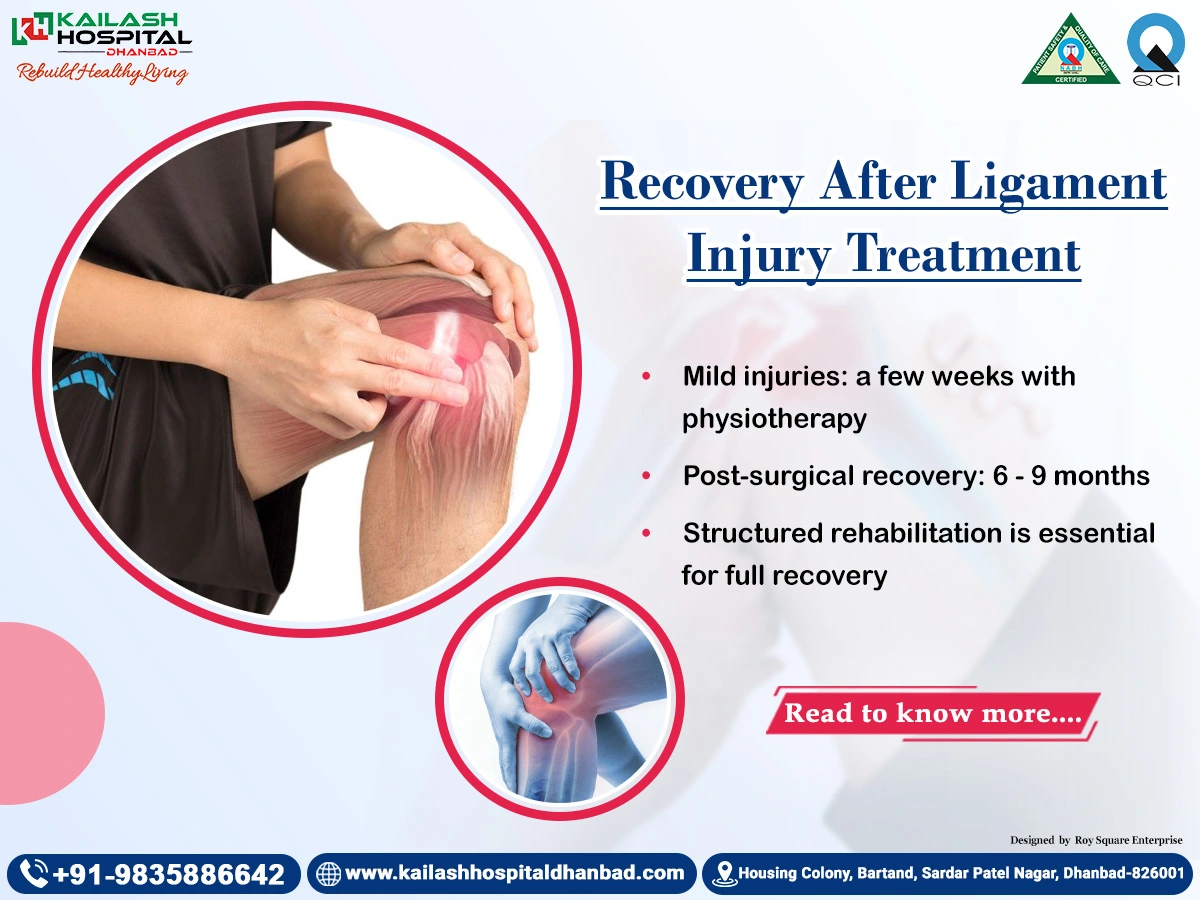
12. Recovery After Ligament Injury Treatment
Recovery depends on injury severity and treatment type:
- Mild injuries: a few weeks with physiotherapy
- Post-surgical recovery: 6–9 months
- Structured rehabilitation is essential for full recovery
Under expert guidance, patients gradually return to daily activities and sports.
13. Long-Term Joint Care After Ligament Injury
Long-term joint health requires:
- Continued muscle strengthening
- Regular physiotherapy sessions
- Maintaining healthy body weight
- Avoiding repetitive joint strain
- Periodic orthopedic evaluations
14. When to Consult an Orthopedic Specialist
You should consult an orthopedic expert if you experience:
- Persistent joint pain or swelling
- Difficulty walking or using the joint
- Recurrent instability
- No improvement with rest
Early consultation with specialist Dr. Ashish Bajaj at Kailash Hospital, Dhanbad ensures accurate diagnosis and effective treatment.
15. Why Choose Kailash Hospital, Dhanbad
Kailash Hospital offers:
- Advanced orthopedic and arthroscopy services
- Experienced specialist Dr. Ashish Bajaj
- Modern diagnostic and surgical facilities
- Personalized treatment and rehabilitation plans
- Patient-focused, compassionate care
16. Conclusion
Ligament injuries can disrupt daily life, but with timely diagnosis, advanced treatment, and proper rehabilitation, full recovery is achievable. Understanding your injury and seeking expert care plays a vital role in long-term joint health.
At Kailash Hospital, Dhanbad, under the expert Dr. Ashish Bajaj, patients receive comprehensive ligament injury treatment using modern techniques designed for faster recovery and lasting results. Early care today ensures stronger, healthier joints tomorrow.
1. Can ligament injuries heal without surgery?
Yes, mild to moderate injuries often heal with proper non-surgical care.
2. How long does ligament healing take?
Healing may take weeks to months depending on injury severity.
3. Is surgery always required for ligament tears?
No, surgery is recommended only in severe or unstable cases.
4. Is physiotherapy important after ligament injury?
Yes, it is crucial for strength, stability, and preventing re-injury.
5. Can ligament injuries recur?
Yes, without proper rehabilitation, recurrence is possible.
6. Are ligament surgeries safe?
Modern arthroscopic procedures are safe and effective.
7. When can I return to sports?
Only after complete healing and medical clearance.
8. Do ligament injuries cause arthritis later?
Untreated injuries can increase arthritis risk.
9. Is MRI necessary for diagnosis?
MRI provides detailed soft tissue assessment and is often recommended.
10. Can lifestyle changes prevent ligament injuries?
Yes, strength training and proper techniques reduce risk.