





Introduction
Cervical spondylitis—often simply called cervical spondylosis—is a common yet painful age-related condition affecting the neck and upper spine. It is increasingly seen not only in older adults but also in young professionals due to modern lifestyle habits such as poor posture, prolonged screen time, and sedentary workspace routines.
At Kailash Hospital, Dhanbad, expert orthopaedic care is led by Dr. Ashish Bajaj, Consultant Orthopaedic, who specializes in diagnosing and treating a wide range of spinal and bone-related disorders. His evidence-based approach and patient-centric care help individuals manage cervical spondylitis effectively and achieve long-term relief.
This guide explains everything you need to know—causes, symptoms, treatment, prevention, and when to seek medical help.
1. What is Cervical Spondylitis?
Cervical spondylitis is a degenerative condition affecting the cervical spine—specifically the bones, discs, and joints of the neck. Over time, wear and tear cause stiffness, chronic neck pain, reduced mobility, and sometimes nerve compression.
According to Dr. Ashish Bajaj, early diagnosis and lifestyle correction significantly improve long-term outcomes.
2. Symptoms of Cervical Spondylitis
Symptoms can vary from mild discomfort to severe neurological issues. The most common include:
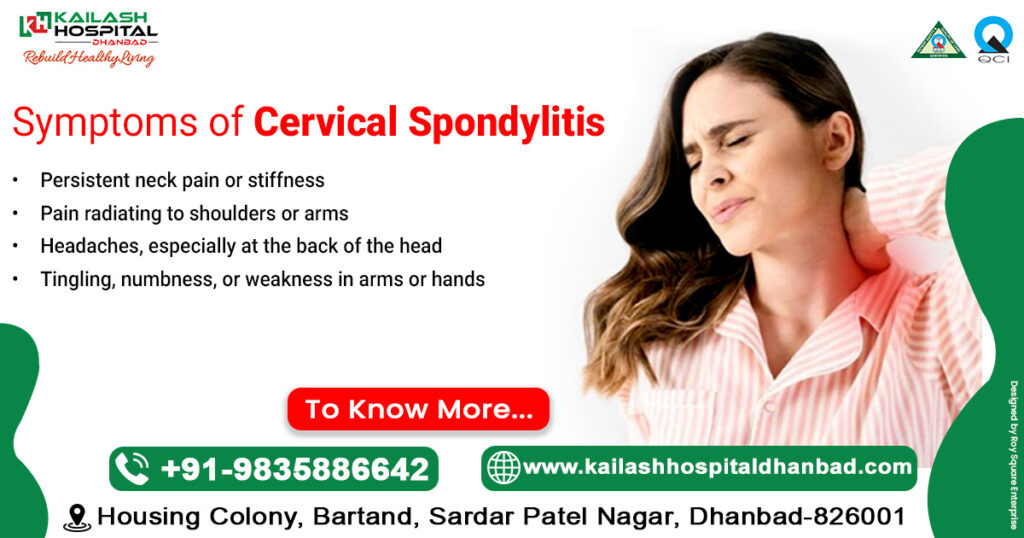
- Persistent neck pain or stiffness
- Pain radiating to shoulders or arms
- Headaches, especially at the back of the head
- Tingling, numbness, or weakness in arms or hands
- Muscle spasms
- Difficulty turning the neck
- Limited mobility during daily activities
- Dizziness in some cases
- Grinding or popping sound while moving the neck

3. Types of Cervical Spondylitis
a) Cervical Spondylosis (Degenerative Neck Disease)
General age-related wear and tear of the spinal discs and joints.
b) Cervical Radiculopathy
Nerve root compression causing radiating pain in arms and hands.
c) Cervical Myelopathy
Spinal cord compression leading to balance issues, coordination problems, and weakness.
d) Axial Neck Pain
Localized neck pain without nerve involvement.
Understanding the type helps guide the right treatment plan.
4. Causes
Cervical spondylitis develops due to multiple factors:
- Age-related degeneration
- Disc dehydration after age 30–40
- Bone spur formation (osteophytes)
- Herniated cervical discs
- Poor posture from laptops, phones, or long drives
- Occupational strain (desk jobs, manual labour)
- Previous neck injury
- Genetic predisposition
- Sedentary lifestyle
5. Risk Factors
You may be at higher risk if you have:
- Age above 40
- Poor ergonomics at work
- Long hours on mobile or computer
- Sedentary lifestyle
- Smoking habits
- Family history of spine disorders
- Trauma or past injury to the neck
- Stress and poor sleeping posture
- Being overweight
6. Diagnosis
Our specialist uses a combination of clinical evaluation and diagnostic tools to identify the condition.
Diagnostic methods include:
- Physical Examination
- Mobility test
- Reflex and strength assessment
- X-rays
- MRI Scan
- CT scan
- Nerve conduction study (EMG/NCS)
- Blood tests (to rule out infections or arthritis)
Accurate diagnosis helps tailor an effective treatment plan.
7. Treatment Options
Treatment depends on severity and overall health. Most cases improve with conservative therapy.
a) Medications
- Pain relievers
- Anti-inflammatory drugs
- Muscle relaxants
- Steroid injections (for severe pain)
b) Physiotherapy
One of the most effective treatments:
- Neck strengthening exercises
- Posture correction
- Heat or cold therapy
- Traction therapy
- Stretching and mobilization
c) Lifestyle Modifications
- Ergonomic work setup
- Avoiding long hours on the phone
- Using neck-support pillows
- Regular stretching
- Weight management
d) Alternative Therapies
- Yoga
- Acupuncture
- Chiropractic care (with caution and medical guidance)
e) Surgical Treatment
Recommended only when:
- Severe nerve compression
- Cervical myelopathy
- Disc prolapses
- Persistent symptoms despite treatment
Surgery aims to relieve nerve pressure and stabilize the spine.
8. Recovery
Recovery depends on age, severity, lifestyle, and treatment adherence. Most patients see improvements within:
- 2–6 weeks with physiotherapy
- 3 months with medication and strengthening
- 6–12 months with long-term lifestyle changes
To support recovery:
- Maintain consistent exercises
- Avoid high-impact activities
- Follow ergonomic habits
- Attend regular follow-ups
9. Complications
Untreated cervical spondylitis may lead to:
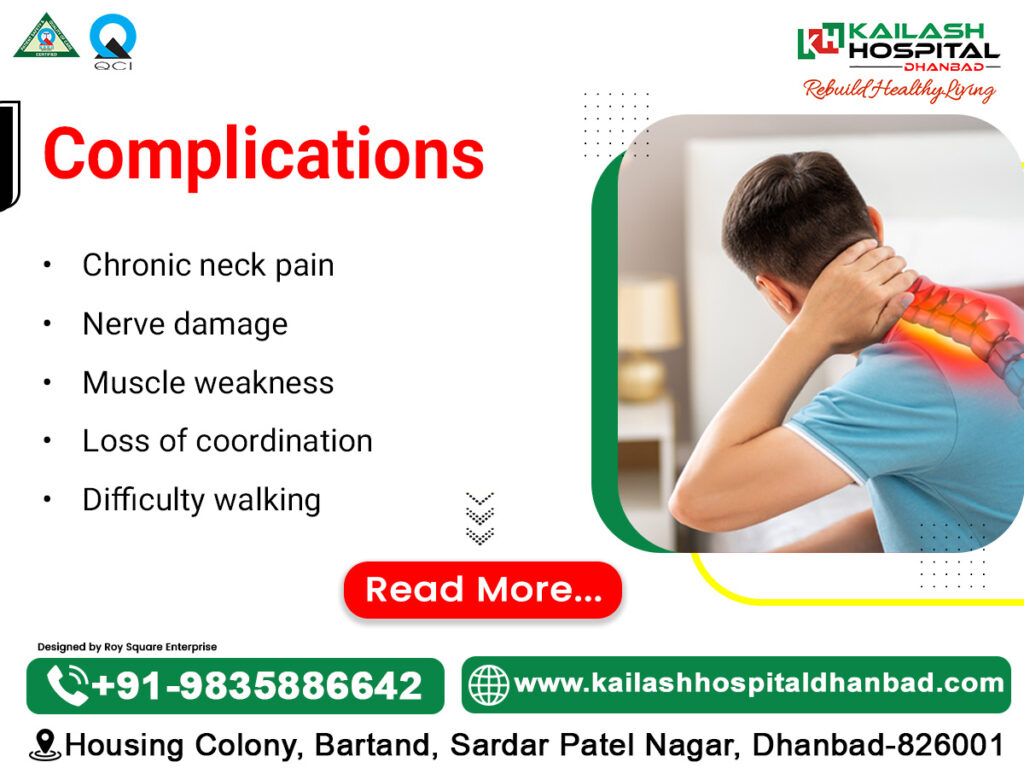
- Chronic neck pain
- Nerve damage
- Muscle weakness
- Loss of coordination
- Difficulty walking
- Limited mobility
- Herniated discs
- Cervical myelopathy
- Permanent disability (rare)
Early intervention prevents most complications.
10. Top 10 FAQs
1. Is cervical spondylitis curable?
Not fully curable, but symptoms can be managed effectively with the right treatment.
2. Can young people get cervical spondylitis?
Yes—due to bad posture and extended device use.
3. What is the fastest way to relieve neck pain?
Heat therapy, rest, gentle stretching, and posture correction.
4. Is surgery always required?
No, only <10% of severe cases need surgery.
5. Can cervical spondylitis cause dizziness?
Yes, due to reduced blood flow or nerve compression.
6. What sleeping position is best?
On your back with a thin pillow.
7. Is physiotherapy helpful?
Yes, it is one of the most effective long-term treatments.
8. Can I exercise?
Yes—low-impact and strengthening exercises help significantly.
9. Does stress worsen symptoms?
Yes, stress increases muscle tension and pain.
10. When should I see a doctor?
If symptoms persist for more than a week or worsen over time.
11. Why Choose Kailash Hospital, Dhanbad?
Kailash Hospital is known for its advanced orthopaedic care, modern infrastructure, and patient-first approach. Here’s why it stands out:
- Experienced Specialists Dr. Ashish Bajaj, Consultant Orthopaedics
- Comprehensive spine evaluation and modern diagnostic tools
- Personalized treatment plans
- Advanced physiotherapy and rehabilitation services
- Minimally invasive surgical expertise
- Affordable and transparent care
- Friendly staff and patient-focused environment
Patients receive both expert medical care and long-term guidance for improved spine health.
Conclusion
Cervical spondylitis is a growing concern in today’s digital age, but with early diagnosis, the right treatment, and healthy lifestyle choices, it can be effectively managed. If you are experiencing persistent neck pain, stiffness, or nerve-related symptoms, consulting a specialist like Dr. Ashish Bajaj at Kailash Hospital, Dhanbad ensures timely care and proper recovery.
Taking care of your spine today ensures long-term mobility, comfort, and a healthier lifestyle.