





1. Introduction
Planning a pregnancy is one of the most important decisions in a woman’s life. After marriage, many couples wonder about the right and healthy age for pregnancy and how age impacts fertility. With changing lifestyles, careers, and health priorities, understanding the women fertility age chart has become more important than ever.
At Kailash Hospital, Dhanbad, women receive expert guidance and personalized fertility care under the supervision of experienced specialist Neha Bajaj, Consultant Gynaecologist and Obstetrician and Fertility Specialist, who helps couples make informed and confident decisions about pregnancy planning.
2. What Is the Healthy Age for Pregnancy After Marriage?
The healthy age for pregnancy after marriage generally refers to the time when a woman’s body is biologically best prepared to conceive, carry, and deliver a healthy baby with minimal risks.
Medically Ideal Age Range
- 21 to 30 years is considered the most favorable period
- Fertility is high, egg quality is optimal
- Pregnancy complications are lower
- Recovery after childbirth is faster
That said, many women conceive safely in their early to mid-30s with proper medical care and lifestyle support.
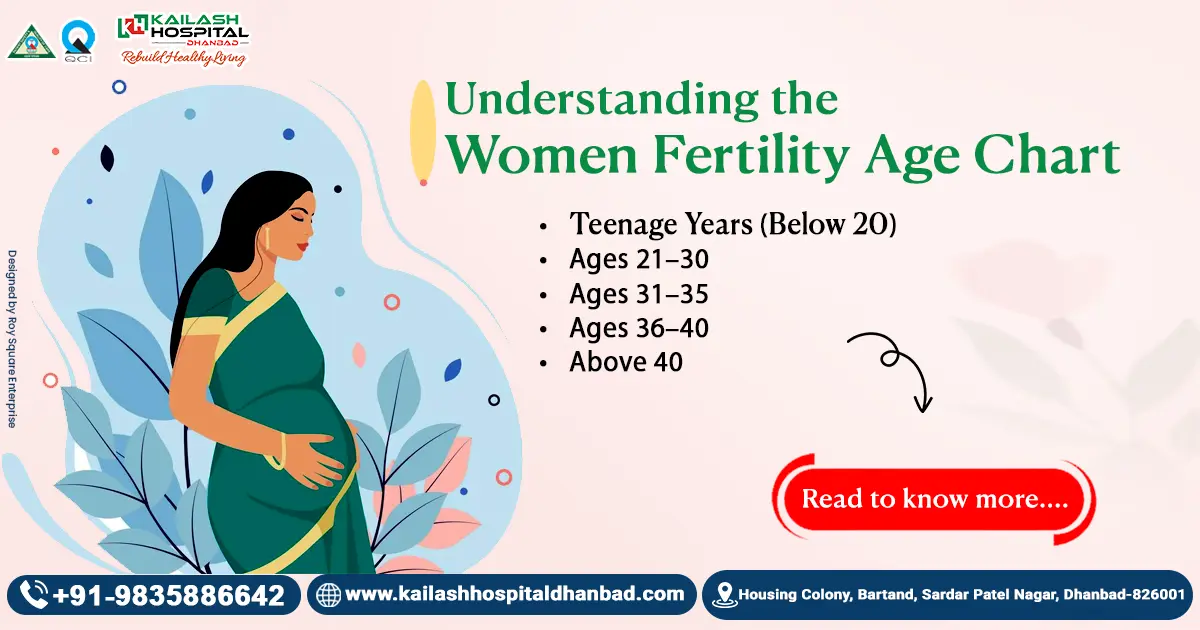
3. Understanding the Women Fertility Age Chart
The women fertility age chart explains how fertility changes over time.
Fertility Timeline in Women
- Teenage Years (Below 20)
Fertility exists but the body is still developing. Pregnancy risks are higher. - Ages 21–30
Peak fertility period. Highest chances of natural conception. - Ages 31–35
Fertility slowly begins to decline, but many women conceive naturally. - Ages 36–40
Egg quality and quantity reduce. Pregnancy is possible with medical guidance. - Above 40
Fertility significantly decreases. Assisted reproductive techniques may be required.
Understanding this chart helps couples plan pregnancy at the safest and healthiest time.
4. Types of Fertility Phases in Women
Women experience different fertility phases based on age and hormonal balance.
a. Peak Fertility Phase
- Usually between 21–30 years
- Regular ovulation
- High egg quality
b. Transitional Fertility Phase
- Between 31–35 years
- Slight hormonal changes
- Fertility still good with planning
c. Declining Fertility Phase
- After 35 years
- Reduced ovarian reserve
- Higher need for medical monitoring
Each phase requires a different approach to pregnancy planning and care.
5. Causes That Influence Fertility With Age
Several biological and lifestyle factors influence fertility as age increases:
- Natural decline in egg count
- Reduced egg quality
- Hormonal changes
- Increased stress levels
- Lifestyle habits like smoking or poor diet
- Existing medical conditions such as PCOS or thyroid disorders
Early awareness allows timely medical support and better outcomes.
6. Risk Factors Affecting Pregnancy at Different Ages
Certain risks are associated with pregnancy at very early or later ages.
Risk Factors Include:
- High blood pressure
- Gestational diabetes
- Miscarriage
- Chromosomal abnormalities
- Preterm delivery
- Cesarean section
Proper antenatal care under specialist Neha Bajaj, Consultant Gynaecologist and Obstetrician and Fertility Specialist at Kailash Hospital, Dhanbad, helps manage these risks effectively.
7. Diagnosis: How Fertility Is Evaluated
Fertility evaluation helps understand reproductive health before planning pregnancy.
Common Diagnostic Tests
- Hormonal blood tests
- Ultrasound scan
- Ovarian reserve testing
- Menstrual cycle assessment
- General health screening
These tests help doctors recommend the best time and method for conception.
8. Treatment Options for Age-Related Fertility Issues
If age-related fertility challenges exist, several treatment options are available:
- Lifestyle and nutritional counseling
- Ovulation induction medicines
- Hormonal therapy
- Fertility monitoring
- Assisted reproductive techniques (if required)
At Kailash Hospital, treatment plans are customized to suit each woman’s age, health, and future goals.
9. Possible Complications of Late or Early Pregnancy
While many women have safe pregnancies, certain complications may arise if pregnancy occurs too early or too late.
Possible Complications
- Anemia
- Pregnancy-induced hypertension
- Delivery complications
- Low birth weight
- Longer recovery period
Regular checkups and early medical support greatly reduce these risks
11. Why Choose Kailash Hospital, Dhanbad
Kailash Hospital is a trusted center for women’s health and fertility care, offering:
- Expert gynecology and obstetric services
- Personalized pregnancy planning
- Advanced diagnostic facilities
- Ethical and patient-centric care
- Experienced specialists like Neha Bajaj, Consultant Gynaecologist and Obstetrician and Fertility Specialist, known for compassionate and evidence-based treatment
The hospital ensures a safe, informed, and supportive journey toward motherhood.
12. Conclusion
Understanding the healthy age for pregnancy after marriage and the women fertility age chart empowers women to make confident and informed choices. While biology plays a role, modern medical care, healthy living, and timely guidance make safe pregnancy possible at many stages of life.
With expert care, early planning, and professional support from Kailash Hospital, Dhanbad, women can look forward to a healthy pregnancy and a joyful motherhood journey.
1. What is the healthiest age to get pregnant after marriage?
21–30 years is medically ideal.
2. Can I conceive after 35?
Yes, with proper medical care and monitoring.
3. Does fertility drop suddenly after 30?
No, it declines gradually.
4. Is pregnancy risky in early 20s?
Generally safe, but physical and emotional readiness matters.
5. Can lifestyle improve fertility?
Yes, diet, exercise, and stress control help significantly.
6. Should I consult a doctor before planning pregnancy?
Yes, pre-pregnancy counseling is recommended.
7. Are fertility tests painful?
No, most tests are simple and painless
8. Can working women plan pregnancy safely?
Absolutely, with proper health management.
9. Is age the only factor affecting fertility?
No, health and lifestyle also matter.
10. When should I seek fertility help?
If conception doesn’t occur after 1 year of trying (or 6 months if above 35).